
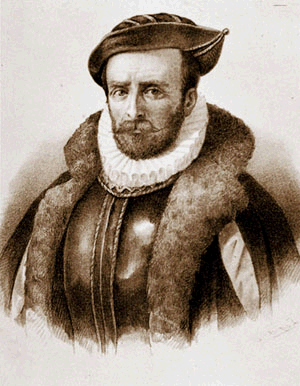
Álvaro de Mendaña de Neira
Álvaro de Mendaña de Neira was a Spanish explorer. Born October 1, 1542, in Bembibre. Died October 18, 1595, in Nendö.
Facts
11 facts · 2 confirmed by two sources · 1 cited · 8 from one source
Where this comes from
Papalocal keeps its own record. It started from these sources; what each one said is kept here as it was copied, so a change on their side never changes this page by itself. Tap one to read its version.
What Wikidata says · copied November 16, 2026 · revision 2527292822
- Described as
- Spanish explorer
- Other names
- Alvaro de Mendana de Neira, Alvaro de Mendana, De Mendana, Mendana, Mendana de Neira, De Mendana de Neira, Alvaro de Mendaña de Neira, Alvaro de Mendaña, De Mendaña, Mendaña, Mendaña de Neira, De Mendaña de Neira
- Born
- October 1, 1542
- Died
- October 18, 1595 · 1 reference
- Born in
- Bembibre
- Died in
- Nendö
- Buried in
- Pacific Ocean
- Citizen of
- Spain
- Occupation
- explorer; sailor; navigator; discoverer · 1 reference
- Spouse
- Isabel Barreto
- Wikipedias with a page
- 35
Wikidata item Q313273 (wikidata.org/wiki/Q313273), public domain (CC0). Copied November 16, 2026.
What Wikipedia says · copied November 16, 2026 · revision 1365304597
Álvaro de Mendaña y Neira (or Neyra) (Spanish pronunciation: [ˈalβaɾo ðe menˈdaɲa i ˈnejɾa]; 1 October 1542 – 18 October 1595) was a Spanish navigator, explorer, and cartographer, best known for two of the earliest recorded expeditions across the Pacific Ocean in 1567 and 1595. His voyages led to the discovery of the Marquesas, Cook Islands, and Solomons among other archipelagos. Born in Congosto, in El Bierzo Region (León), he was the nephew of Lope García de Castro, viceroy of Peru.
- Born, in its opening lines
- October 1, 1542
- Died, in its opening lines
- October 18, 1595
From the Wikipedia article “Álvaro de Mendaña de Neira” (en.wikipedia.org/wiki/Álvaro_de_Mendaña_de_Neira), by its contributors, under CC BY-SA 4.0 (creativecommons.org/licenses/by-sa/4.0/). Copied November 16, 2026; not changed.
Confirmed Two sources agree. Cited One source, and it names where it got it. One source One source, without a reference of its own. Sources disagree The sources disagree. We show the best-supported value and keep theirs below.
