
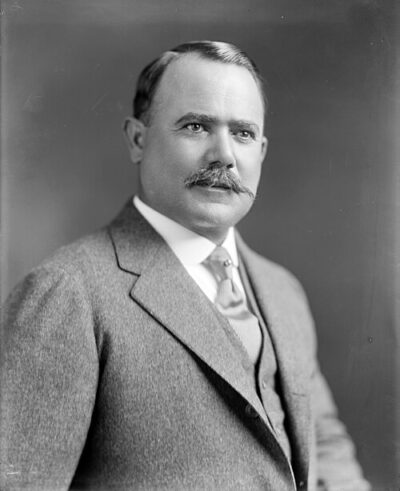
Álvaro Obregón
Álvaro Obregón was a Mexican politician, president of Mexico. Born February 19, 1880, in Navojoa. Died July 17, 1928, in San Ángel. Positions held include President of Mexico (1920–1924) and minister. Awards include Grand Cordon of the Supreme Order of the Chrysanthemum.
Facts
14 facts · 2 confirmed by two sources · 1 cited · 11 from one source
Where this comes from
Papalocal keeps its own record. It started from these sources; what each one said is kept here as it was copied, so a change on their side never changes this page by itself. Tap one to read its version.
What Wikidata says · copied November 16, 2026 · revision 2567986445
- Described as
- Mexican politician, president of Mexico
- Other names
- Alvaro Obregon, President Obregon
- Born
- February 19, 1880 · 4 references
- Died
- July 17, 1928 · 5 references
- Born in
- Navojoa
- Died in
- San Ángel
- Buried in
- Huatabampo Municipality · 1 reference
- Citizen of
- Mexico
- Occupation
- politician · 1 reference; military personnel
- Positions held
- President of Mexico (1920–1924); minister
- Political party
- Mexican Laborist Party
- Awards
- Grand Cordon of the Supreme Order of the Chrysanthemum
- Military branch
- Mexican Army · 1 reference
- Military rank
- general
- Wikipedias with a page
- 54
Wikidata item Q217498 (wikidata.org/wiki/Q217498), public domain (CC0). Copied November 16, 2026.
What Wikipedia says · copied November 16, 2026 · revision 1385111190
Álvaro Obregón Salido (Spanish pronunciation: [ˈalβaɾo oβɾeˈɣon]; 19 February 1880 – 17 July 1928) was a Mexican general, inventor, and politician who served as the 46th President of Mexico from 1920 to 1924. Obregón was re-elected to the presidency in 1928 but was assassinated before he could take office.
Born in Navojoa, Sonora, Obregón joined the Revolution after the February 1913 coup d'état that brought General Victoriano Huerta to the presidency. Obregón supported Sonora's decision to follow Governor Venustiano Carranza as leader of the northern revolutionary coalition, the Constitutionalist Army, against the Huerta regime. Obregón quickly became the Constitutionalist Army's most prominent general, along with Pancho Villa. Carranza appointed Obregón commander of the revolutionary forces in northwestern Mexico. The Constitutionalists defeated Huerta in July 1914, and the Federal Army dissolved in August. In 1915, the revolution entered a new phase of civil war between the Conventionists led by Emiliano Zapata and Villa versus Obregón and Carranza. Obregón was made leader of the Constitutionalist army and defeated Villa, but lost his right arm. In 1917, the Constitution of Mexico went into effect and the Conventionists forces were quickly getting defeated by Obregón and the Constitutionalist Army. Carranza stepped down from the presidency and designated Ignacio Bonillas to succeed him. Obregón and other Sonoran generals Plutarco Elías Calles and Adolfo de la Huerta ousted Bonillas and Carranza under the Plan of Agua Prieta. Obregón was elected to the presidency in 1920 with overwhelming popular support.
Obregón's presidency saw educational reform, the flourishing of Mexican muralism, moderate land reform, and labor laws sponsored by the increasingly powerful Regional Confederation of Mexican Workers. In August 1923, he signed the Bucareli Treaty that clarified the rights of the Mexican government and U.S. oil interests and brought U.S. diplomatic recognition to his government. In 1923–24, Obregón's finance minister, Adolfo de la Huerta, launched a rebellion when Obregón designated Plutarco Elías Calles as his successor. De la Huerta garnered support by many revolutionaries who were opposed to Obregón's apparent emulation of Porfirio Díaz's example. Obregón returned to the battlefield and defeated the rebellion. In his victory, he was aided by the United States with arms and planes that bombed de la Huerta's supporters.
In 1924, Obregón's fellow Northern revolutionary general and hand-picked successor, Plutarco Elías Calles, was elected president. Although Obregón ostensibly retired to Sonora, he remained influential under Calles. Calles pushed through constitutional reform to again make re-election possible, but not continuously. Obregón won the 1928 election. Before beginning his second term however, he was assassinated by José de León Toral during the Cristero War. Obregón's political legacy is that of pragmatic centrism, allying with various factions of the revolution to accomplish his goals. According to historian Linda B. Hall, "Álvaro Obregón stood out as the organizer, the peacemaker, the unifier." His assassination precipitated a political crisis in the country, ultimately leading to Calles founding the National Revolutionary Party, later renamed the Institutional Revolutionary Party, which would dominate Mexican politics throughout the 20th century.
- Born, in its opening lines
- February 19, 1880
- Died, in its opening lines
- July 17, 1928
From the Wikipedia article “Álvaro Obregón” (en.wikipedia.org/wiki/Álvaro_Obregón), by its contributors, under CC BY-SA 4.0 (creativecommons.org/licenses/by-sa/4.0/). Copied November 16, 2026; not changed.
Confirmed Two sources agree. Cited One source, and it names where it got it. One source One source, without a reference of its own. Sources disagree The sources disagree. We show the best-supported value and keep theirs below.
