
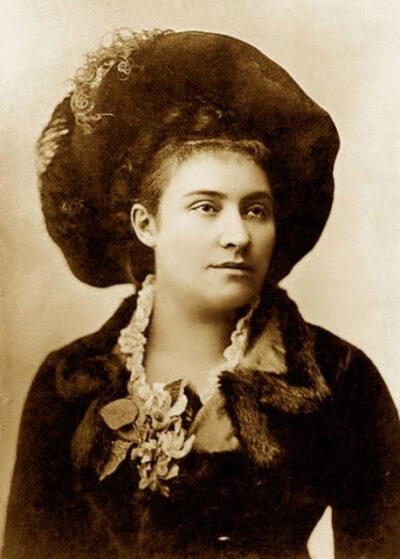
Amalie Materna
Amalie Materna was an Austrian operatic soprano. Born July 10, 1844, in Sankt Georgen an der Stiefing. Died January 18, 1918, in Vienna. Awards include Österreichischer Kammersänger.
Facts
12 facts · 2 confirmed by two sources · 3 cited · 7 from one source
Where this comes from
Papalocal keeps its own record. It started from these sources; what each one said is kept here as it was copied, so a change on their side never changes this page by itself. Tap one to read its version.
What Wikidata says · copied November 18, 2026 · revision 2568598084
- Described as
- Austrian operatic soprano (1844-1918)
- Other names
- Amalie Friedrich-Materna
- Born
- July 10, 1844 · 4 references
- Died
- January 18, 1918 · 4 references
- Born in
- Sankt Georgen an der Stiefing · 1 reference
- Died in
- Vienna · 1 reference
- Buried in
- Vienna Central Cemetery
- Name at birth
- Amalie Friedrich-Materna
- Citizen of
- Austria–Hungary
- Occupation
- opera singer · 1 reference
- Worked for
- Vienna State Opera company
- Genre
- opera · 1 reference
- Instrument
- voice
- Awards
- Österreichischer Kammersänger
- Wikipedias with a page
- 21
Wikidata item Q2840970 (wikidata.org/wiki/Q2840970), public domain (CC0). Copied November 18, 2026.
What Wikipedia says · copied November 18, 2026 · revision 1365554351
Amalie Materna (German pronunciation: [aˈmaːli̯ə maˈtɛʁna]) born Amalia, later Amalie Friedrich-Materna) (10 July 1844 St. Georgen in der Steiermark – 18 January 1918 Vienna) was an Austrian operatic dramatic soprano. While possessing a famously powerful voice, Materna also maintained a youthful, bright vocal timbre throughout her career which spanned three decades. She is best remembered today for originating several roles (such as Brünnhilde) in operas by Richard Wagner.
- Born, in its opening lines
- July 10, 1844
- Died, in its opening lines
- January 18, 1918
From the Wikipedia article “Amalie Materna” (en.wikipedia.org/wiki/Amalie_Materna), by its contributors, under CC BY-SA 4.0 (creativecommons.org/licenses/by-sa/4.0/). Copied November 18, 2026; not changed.
Confirmed Two sources agree. Cited One source, and it names where it got it. One source One source, without a reference of its own. Sources disagree The sources disagree. We show the best-supported value and keep theirs below.
