
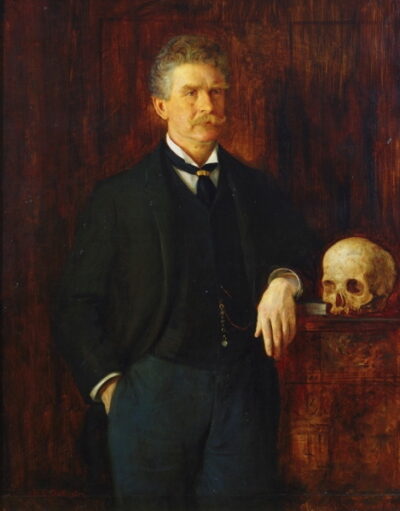
Ambrose Bierce
Ambrose Bierce was an American editorialist, journalist, short story writer, fabulist, and satirist. Born June 24, 1842, in Meigs County. Died 1914, in Chihuahua City. Known for An Occurrence at Owl Creek Bridge, The Damned Thing and The Devil's Dictionary.
Facts
27 facts · 0 confirmed by two sources · 9 cited · 18 from one source
Where this comes from
Papalocal keeps its own record. It started from these sources; what each one said is kept here as it was copied, so a change on their side never changes this page by itself. Tap one to read its version.
What Wikidata says · copied November 13, 2026 · revision 2564639997
- Described as
- American editorialist, journalist, short story writer, fabulist, and satirist (1842–1914)
- Other names
- William Herman, Ambrose Gwinnett Bierce, Dod Grile
- Born
- June 24, 1842 · 11 references
- Died
- 1914 · 1 reference
- Born in
- Meigs County
- Died in
- Chihuahua City
- Name at birth
- Ambrose Gwinnetter Bierice
- Citizen of
- United States
- Occupation
- writer · 1 reference; journalist · 1 reference; aphorist; poet; science fiction writer; horror writer
- Genre
- satire; horror literature
- Known for
- An Occurrence at Owl Creek Bridge; The Damned Thing; The Devil's Dictionary; Tales of Soldiers and Civilians · 1 reference
- Field
- literature · 1 reference
- Spouse
- Mary Ellen Day (1871–) · 1 reference
- Children
- Leigh Lee Bierce · 1 reference
- Father
- Marcus Aurelius Bierce · 1 reference
- Mother
- Laura Sherwood · 1 reference
- Religion
- Christianity
- Military branch
- Union Army
- Military rank
- first lieutenant
- Website
- https://donswaim.com
- Wikipedias with a page
- 101
Wikidata item Q191050 (wikidata.org/wiki/Q191050), public domain (CC0). Copied November 13, 2026.
What Wikipedia says · copied November 13, 2026 · revision 1380296403
Ambrose Gwinnett Bierce (June 24, 1842 – c. 1914) was an American author, journalist, and poet. A prolific and versatile writer, Bierce was regarded as one of the most influential journalists in the United States and as a pioneering writer of realist fiction. For his horror writing, Michael Dirda ranked him alongside Edgar Allan Poe and H. P. Lovecraft. S. T. Joshi speculates that "he may well be the greatest satirist America has ever produced, and in this regard can take his place with such figures as Juvenal, Swift, and Voltaire." His war stories influenced Stephen Crane, Ernest Hemingway and others, and he was considered an influential and feared literary critic. In recent decades, Bierce has gained wider respect as a fabulist and poet.
His book The Devil's Dictionary was named one of "The 100 Greatest Masterpieces of American Literature" by the American Revolution Bicentennial Administration. His story "An Occurrence at Owl Creek Bridge" has been described as "one of the most famous and frequently anthologized stories in American literature", and his book Tales of Soldiers and Civilians (also published as In the Midst of Life) was named by the Grolier Club one of the 100 most influential American books printed before 1900.
In 1913, Bierce told reporters that he was travelling to Mexico to gain first-hand experience of the Mexican Revolution. He disappeared and was never seen again.
From the Wikipedia article “Ambrose Bierce” (en.wikipedia.org/wiki/Ambrose_Bierce), by its contributors, under CC BY-SA 4.0 (creativecommons.org/licenses/by-sa/4.0/). Copied November 13, 2026; not changed.
Confirmed Two sources agree. Cited One source, and it names where it got it. One source One source, without a reference of its own. Sources disagree The sources disagree. We show the best-supported value and keep theirs below.
