
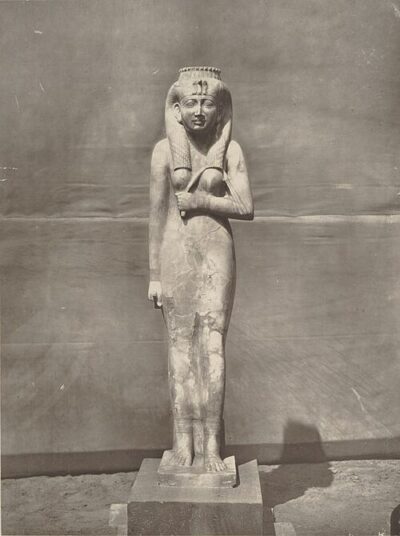
Amenirdis I
Amenirdis I was an ancient Egyptian princess and priestess, God's Wife of Amun. Born 8th century BC. Died 720 BC. Positions held include God's Wife of Amun and Divine Adoratrice of Amun.
Facts
12 facts · 0 confirmed by two sources · 0 cited · 12 from one source
Where this comes from
Papalocal keeps its own record. It started from these sources; what each one said is kept here as it was copied, so a change on their side never changes this page by itself. Tap one to read its version.
What Wikidata says · copied November 17, 2026 · revision 2564057365
- Described as
- ancient Egyptian princess and priestess, God's Wife of Amun
- Other names
- AMENIRITIS
- Born
- 8th century BC
- Died
- 720 BC
- Buried in
- Medinet Habu · 1 reference
- Citizen of
- Twenty-fifth Dynasty of Egypt
- Occupation
- sovereign
- Positions held
- God's Wife of Amun; Divine Adoratrice of Amun
- Children
- Shepenupet II
- Father
- Kashta
- Mother
- Pebatjma
- Siblings
- Khensa
- Religion
- religion of ancient Egypt
- Wikipedias with a page
- 26
Wikidata item Q270393 (wikidata.org/wiki/Q270393), public domain (CC0). Copied November 17, 2026.
What Wikipedia says · copied November 17, 2026 · revision 1384182202
Amenirdis I also spelled Amnéritis, Amenaedais (throne name: Hatneferumut) was a God's Wife of Amun during the 25th Dynasty of ancient Egypt. Originating from the Kingdom of Kush, she was the daughter of Pharaoh Kashta and Queen Pebatjma, and was later adopted by Shepenupet I. She went on to rule as high priestess, and has been shown in several artefacts from the period.
From the Wikipedia article “Amenirdis I” (en.wikipedia.org/wiki/Amenirdis_I), by its contributors, under CC BY-SA 4.0 (creativecommons.org/licenses/by-sa/4.0/). Copied November 17, 2026; not changed.
Confirmed Two sources agree. Cited One source, and it names where it got it. One source One source, without a reference of its own. Sources disagree The sources disagree. We show the best-supported value and keep theirs below.
