
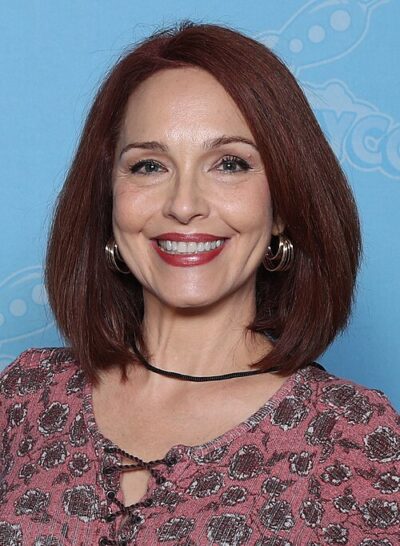
Amy Yasbeck
Amy Yasbeck is an American actress. Born September 12, 1962, in Blue Ash. Educated at University of Detroit Mercy and Summit Country Day School.
Facts
9 facts · 1 confirmed by two sources · 1 cited · 7 from one source
Where this comes from
Papalocal keeps its own record. It started from these sources; what each one said is kept here as it was copied, so a change on their side never changes this page by itself. Tap one to read its version.
What Wikidata says · copied November 16, 2026 · revision 2567126927
- Described as
- American actress (1962-)
- Other names
- Amy Marie Yasbeck
- Born
- September 12, 1962 · 2 references
- Born in
- Blue Ash
- Name at birth
- Amy Marie Yasbeck
- Citizen of
- United States
- Occupation
- actor · 1 reference
- Education
- University of Detroit Mercy; Summit Country Day School · 1 reference
- Spouse
- John Ritter (1999–2003)
- Children
- Noah Lee Ritter
- Wikipedias with a page
- 24
Wikidata item Q259703 (wikidata.org/wiki/Q259703), public domain (CC0). Copied November 16, 2026.
What Wikipedia says · copied November 16, 2026 · revision 1384314029
Amy Yasbeck (born September 12, 1962) is an American actress and philanthropist. She is best known for her role as Casey Chappel Davenport on the sitcom Wings from 1994 to 1997 and for having played the mermaid Madison in the television film Splash, Too in 1988. Yasbeck has guest-starred in several television shows and appeared in the films House II: The Second Story, Pretty Woman, Problem Child, Problem Child 2, The Mask, Robin Hood: Men in Tights, and Dracula: Dead and Loving It. She is the widow of John Ritter and founder of The John Ritter Foundation for Aortic Health which supports research, and conducts advocacy and education, toward prevention of aortic dissections.
- Born, in its opening lines
- September 12, 1962
From the Wikipedia article “Amy Yasbeck” (en.wikipedia.org/wiki/Amy_Yasbeck), by its contributors, under CC BY-SA 4.0 (creativecommons.org/licenses/by-sa/4.0/). Copied November 16, 2026; not changed.
Confirmed Two sources agree. Cited One source, and it names where it got it. One source One source, without a reference of its own. Sources disagree The sources disagree. We show the best-supported value and keep theirs below.
