
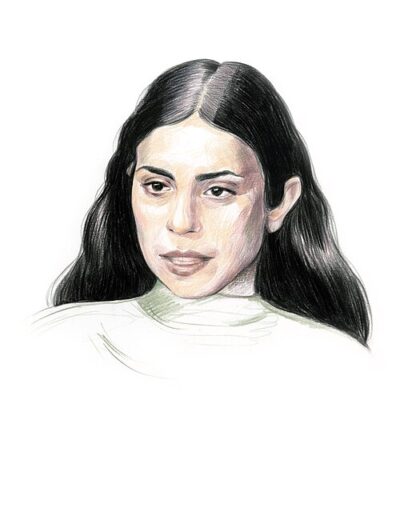
Ana Mendieta
Ana Mendieta was a Cuban-American artist. Born November 18, 1948, in Havana. Died September 8, 1985, in New York City. Educated at University of Iowa. Awards include Guggenheim Fellowship and Rome Prize.
Facts
25 facts · 2 confirmed by two sources · 16 cited · 7 from one source
Where this comes from
Papalocal keeps its own record. It started from these sources; what each one said is kept here as it was copied, so a change on their side never changes this page by itself. Tap one to read its version.
What Wikidata says · copied November 15, 2026 · revision 2530401549
- Described as
- Cuban-American artist (1948–1985)
- Other names
- Ana Maria Mendieta, Mendieta, Ana, 1948-1985
- Born
- November 18, 1948 · 9 references
- Died
- September 8, 1985 · 6 references
- Born in
- Havana · 4 references
- Died in
- New York City · 1 reference
- Citizen of
- United States · 1 reference; Cuba · 2 references
- Occupation
- performance artist · 3 references; artist · 4 references; painter · 2 references; visual artist · 1 reference; land artist; photographer · 2 references; video artist · 5 references; sculptor · 3 references
- Education
- University of Iowa (1969–1977) · 1 reference
- Genre
- portrait · 1 reference; performance art · 1 reference; video art; self-portrait
- Awards
- Guggenheim Fellowship (1980) · 1 reference; Rome Prize (1983) · 1 reference
- Field
- performance art · 1 reference
- Spouse
- Carl Andre (–1985)
- Lived in
- Havana; New York City · 1 reference
- Wikipedias with a page
- 24
Wikidata item Q463639 (wikidata.org/wiki/Q463639), public domain (CC0). Copied November 15, 2026.
What Wikipedia says · copied November 15, 2026 · revision 1381588228
Ana Mendieta (November 18, 1948 – September 8, 1985) was a Cuban-American performance artist, sculptor, painter, and video artist who is best known for her "earth-body" artwork. She is considered one of the most influential Cuban-American artists of the post–World War II era. She is best known for the Silueta series (1973-1985), in which she made female silhouettes in mud, sand and grass. Born in Havana, Cuba, Mendieta left for the United States in 1961. She was sent at age 12 with her sister through Operations Pedro Pan and raised in Iowa foster homes and institutions. She was awarded the Roma Prize by the American Academy in Rome in 1983, and her work has been the subject of retrospectives including one at the Hirshhorn Museum in 2004.
Mendieta died on September 8, 1985, in New York City, after falling from her 34th-floor apartment. She lived there with her husband of eight months, minimalist sculptor Carl Andre. The circumstances surrounding her death have been the subject of controversy. Neighbors heard Mendieta shouting "No" multiple times immediately before the fall followed by the thud of her body on a roof below. Andre told police it was a suicide and was acquitted of murdering her in a bench trial, sparking outrage amongst feminists who maintained that Mendieta was murdered.
- Born, in its opening lines
- November 18, 1948
- Died, in its opening lines
- September 8, 1985
From the Wikipedia article “Ana Mendieta” (en.wikipedia.org/wiki/Ana_Mendieta), by its contributors, under CC BY-SA 4.0 (creativecommons.org/licenses/by-sa/4.0/). Copied November 15, 2026; not changed.
Confirmed Two sources agree. Cited One source, and it names where it got it. One source One source, without a reference of its own. Sources disagree The sources disagree. We show the best-supported value and keep theirs below.
