
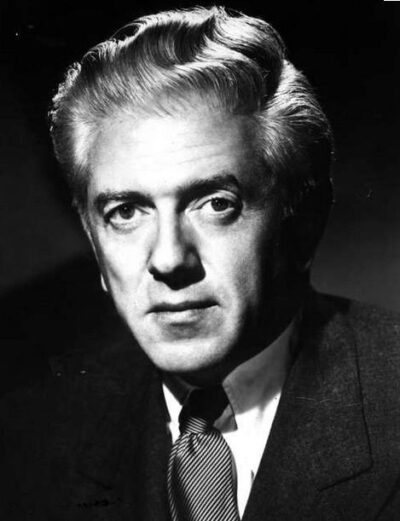
Anatole Litvak
Anatole Litvak was an Ukrainian-American filmmaker. Born May 21, 1902, in Kyiv. Died December 15, 1974, in Neuilly-sur-Seine. Awards include Legionnaire of Legion of Merit, National Board of Review Award for Best Film and star on Hollywood Walk of Fame.
Facts
22 facts · 1 confirmed by two sources · 9 cited · 11 from one source · 1 where the sources disagree
What’s different
- Born: we show May 21, 1902 (Sources disagree). Wikipedia says June 3, 1902
Where this comes from
Papalocal keeps its own record. It started from these sources; what each one said is kept here as it was copied, so a change on their side never changes this page by itself. Tap one to read its version.
What Wikidata says · copied November 15, 2026 · revision 2557734687
- Described as
- Ukrainian-American filmmaker (1902–1974)
- Other names
- Anatoly Mikhailovich Litvak
- Born
- May 21, 1902 · 1 reference
- Died
- December 15, 1974 · 8 references
- Born in
- Kyiv · 2 references
- Died in
- Neuilly-sur-Seine · 1 reference
- Buried in
- Père Lachaise Cemetery · 1 reference
- Name at birth
- Анатолий Мойшевич Литвак
- Citizen of
- United States; Russian Empire; France · 2 references
- Occupation
- film director · 1 reference; film producer; stage actor; film actor; screenwriter · 2 references; director · 2 references; assistant director · 1 reference; actor · 1 reference
- Awards
- Legionnaire of Legion of Merit; National Board of Review Award for Best Film; star on Hollywood Walk of Fame · 1 reference
- Spouse
- Miriam Hopkins (1937–1939); Sophie Litvak (1955)
- Wikipedias with a page
- 36
Wikidata item Q213581 (wikidata.org/wiki/Q213581), public domain (CC0). Copied November 15, 2026.
What Wikipedia says · copied November 15, 2026 · revision 1383210061
Anatoly Mikhailovich Litvak OBE (June 3, 1902 – December 15, 1974), commonly known as Anatole Litvak, was a Ukrainian and American filmmaker.
Born to Jewish parents in Kiev, then in the Russian Empire, he began his theatrical training at age 13 in Saint Petersburg, where he lived through the end of the Russian Revolution. He began his film directing career in Germany and France, before moving to the United States in the late 1930s.
Litvak was notable for directing little-known foreign actors to early fame and is believed to have contributed to several actors winning Academy Awards. In 1936 he directed Mayerling, a film which made French actors Charles Boyer and Danielle Darrieux international stars. He returned Swedish star Ingrid Bergman to popularity with American audiences in 1956 with Anastasia, in which she won her second Oscar. He directed Olivia de Havilland to an Academy Award nomination for The Snake Pit (1948). He directed Jean Gabin in his screen debut and directed Elia Kazan in his earliest acting role, City for Conquest.
Litvak directed Confessions of a Nazi Spy in 1939, starring Edward G. Robinson, which used actual newsreel footage from U.S. Nazi rallies. As a refugee from Nazi Germany, Litvak was among the few directors who tried to open Hollywood's eyes to the threat Germany posed to Europe and the world.
During World War II, he enlisted and co-directed documentaries with Frank Capra, including Why We Fight films. On his own he directed The Battle of Russia (1943), which won numerous awards and was nominated for an Oscar. Because of Litvak's fluency in multiple languages, he supervised the filming of the D-Day Normandy landings. He also filmed aerial warfare with the U.S. Eighth Air Force. He was promoted to full colonel by the end of the war for his volunteer wartime efforts. He received special awards from the governments of France, Britain, and the United States.
- Born, in its opening lines
- June 3, 1902
- Died, in its opening lines
- December 15, 1974
From the Wikipedia article “Anatole Litvak” (en.wikipedia.org/wiki/Anatole_Litvak), by its contributors, under CC BY-SA 4.0 (creativecommons.org/licenses/by-sa/4.0/). Copied November 15, 2026; not changed.
Confirmed Two sources agree. Cited One source, and it names where it got it. One source One source, without a reference of its own. Sources disagree The sources disagree. We show the best-supported value and keep theirs below.
