
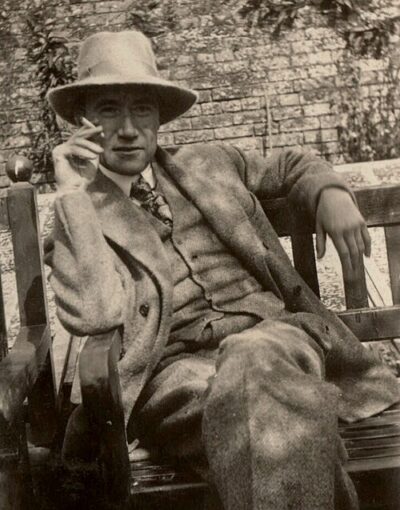
André Gide
André Gide was a French author and Nobel laureate. Born November 22, 1869, in Paris. Died February 19, 1951, in Paris. Known for The Immoralist, Strait is the Gate and La Symphonie Pastorale. Educated at Lycée Henri-IV and École alsacienne. Awards include Nobel Prize in Literature, Goethe Plaque of the City of Frankfurt and Goethe Medal for Art and Science.
Facts
40 facts · 2 confirmed by two sources · 7 cited · 31 from one source
Where this comes from
Papalocal keeps its own record. It started from these sources; what each one said is kept here as it was copied, so a change on their side never changes this page by itself. Tap one to read its version.
What Wikidata says · copied November 16, 2026 · revision 2568734113
- Described as
- French author and Nobel laureate (1869–1951)
- Other names
- Andre Gide, Gide, André Paul Guillaume Gide, Andre Paul Guillaume Gide
- Born
- November 22, 1869 · 18 references
- Died
- February 19, 1951 · 13 references
- Born in
- Paris · 4 references
- Died in
- Paris · 3 references
- Name at birth
- André Paul Guillaume Gide
- Citizen of
- France
- Occupation
- journalist; film producer; essayist; playwright · 2 references; novelist; diarist; travel writer; translator · 2 references
- Worked for
- Le Figaro
- Education
- Lycée Henri-IV; École alsacienne
- Member of
- Décades de Pontigny; comité de lecture des éditions Gallimard (1938–1939)
- Genre
- prose · 1 reference; theatre · 1 reference
- Known for
- The Immoralist; Strait is the Gate; La Symphonie Pastorale; The Counterfeiters; Corydon; The Fruits of the Earth; Les Caves du Vatican; Si le grain ne meurt; Travels in the Congo; Retour de L'U.R.S.S.
- Awards
- Nobel Prize in Literature (1947) · 2 references; Goethe Plaque of the City of Frankfurt (1949); Goethe Medal for Art and Science; Grand Prize for the Best Novels of the Half-Century (1950) · 1 reference
- Field
- fiction · 1 reference
- Spouse
- Madeleine Gide (–1938) · 1 reference
- Children
- Catherine Gide
- Father
- Paul Gide
- Mother
- Juliette Gide
- Wikipedias with a page
- 145
Wikidata item Q47484 (wikidata.org/wiki/Q47484), public domain (CC0). Copied November 16, 2026.
What Wikipedia says · copied November 16, 2026 · revision 1382050214
André Paul Guillaume Gide (French: [ɑ̃dʁe pɔl ɡijom ʒid]; 22 November 1869 – 19 February 1951) was a French author whose writing spanned a wide variety of styles and topics. He was awarded the 1947 Nobel Prize in Literature. Gide's career ranged from his beginnings in the symbolist movement to criticising imperialism in the interwar period. Author of more than 50 books, he was described in his obituary in The New York Times as "France's greatest contemporary man of letters" and "judged the greatest French writer of this century by the literary cognoscenti."
Known for his fiction as well as his autobiographical works, Gide expressed the conflict and eventual reconciliation of the two sides of his personality (characterized by a Protestant austerity and a transgressive sexual adventurousness, respectively). As a self-professed pederast, he used his writing to explore his struggle to be fully oneself, including owning one's sexual nature, without betraying one's values. His political activity was shaped by the same ethos. While sympathetic to Communism in the early 1930s, like many intellectuals, after his 1936 journey to the USSR he supported the anti-Stalinist left. Towards the end of his life, in the 1940s, he shifted towards more traditional values and repudiated Communism as an idea that breaks with the traditions of Christian civilization.
- Born, in its opening lines
- November 22, 1869
- Died, in its opening lines
- February 19, 1951
From the Wikipedia article “André Gide” (en.wikipedia.org/wiki/André_Gide), by its contributors, under CC BY-SA 4.0 (creativecommons.org/licenses/by-sa/4.0/). Copied November 16, 2026; not changed.
Confirmed Two sources agree. Cited One source, and it names where it got it. One source One source, without a reference of its own. Sources disagree The sources disagree. We show the best-supported value and keep theirs below.
