
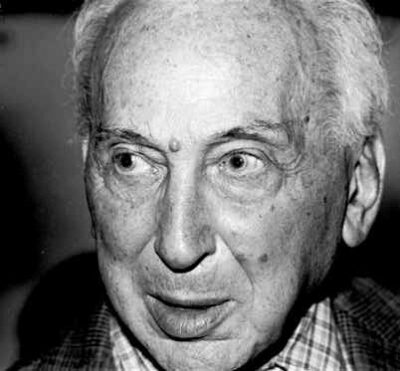
André Kertész
André Kertész was a Hungarian photographer. Born July 2, 1894, in Budapest. Died September 28, 1985, in New York City. Awards include Guggenheim Fellowship and Legion of Honour.
Facts
16 facts · 2 confirmed by two sources · 5 cited · 9 from one source
Where this comes from
Papalocal keeps its own record. It started from these sources; what each one said is kept here as it was copied, so a change on their side never changes this page by itself. Tap one to read its version.
What Wikidata says · copied November 15, 2026 · revision 2563083301
- Described as
- Hungarian photographer (1894–1985)
- Other names
- Andre Kertesz, Andor Kertesz, András Kertész, Andor Kertész, Andras Kertesz
- Born
- July 2, 1894 · 5 references
- Died
- September 28, 1985 · 6 references
- Born in
- Budapest · 3 references
- Died in
- New York City · 2 references
- Name at birth
- Andor Kertész
- Citizen of
- Kingdom of Hungary; United States · 1 reference
- Occupation
- photographer · 5 references; writer; photojournalist; journalist; art photographer
- Awards
- Guggenheim Fellowship · 1 reference; Legion of Honour (1983)
- Field
- photography · 1 reference
- Religion
- Judaism
- Wikipedias with a page
- 31
Wikidata item Q241754 (wikidata.org/wiki/Q241754), public domain (CC0). Copied November 15, 2026.
What Wikipedia says · copied November 15, 2026 · revision 1372199414
André Kertész (French: [kɛʁtɛs]; 2 July 1894 – 28 September 1985), born Andor Kertész (Hungarian: [ˈɒndor ˈkɛrteːs]), was a Hungarian-born photographer known for his groundbreaking contributions to photographic composition and the photo essay. In the early years of his career, his then-unorthodox camera angles and style prevented his work from gaining wider recognition. Kertész never felt that he had gained the worldwide recognition he deserved. Today he is considered one of the seminal figures of 20th century photography.
Expected by his family to work as a stockbroker, Kertész pursued photography independently as an autodidact, and his early work was published primarily in magazines, a major market in those years. This continued until much later in his life, when Kertész stopped accepting commissions. He served briefly in World War I and moved to Paris in 1925, then the artistic capital of the world, against the wishes of his family. In Paris he worked for France's first illustrated magazine called VU. Involved with many young immigrant artists and the Dada movement, he achieved critical and commercial success.
Due to German persecution of the Jews and the threat of World War II, Kertész decided to emigrate to the United States in 1936, where he had to rebuild his reputation through commissioned work. In the 1940s and 1950s, he stopped working for magazines and began to achieve greater international success. His career is generally divided into four periods, based on where he was working and where his work was most prominently known. They are called the Hungarian period, the French period, the American period, and, toward the end of his life, the International period.
- Born, in its opening lines
- July 2, 1894
- Died, in its opening lines
- September 28, 1985
From the Wikipedia article “André Kertész” (en.wikipedia.org/wiki/André_Kertész), by its contributors, under CC BY-SA 4.0 (creativecommons.org/licenses/by-sa/4.0/). Copied November 15, 2026; not changed.
Confirmed Two sources agree. Cited One source, and it names where it got it. One source One source, without a reference of its own. Sources disagree The sources disagree. We show the best-supported value and keep theirs below.
