
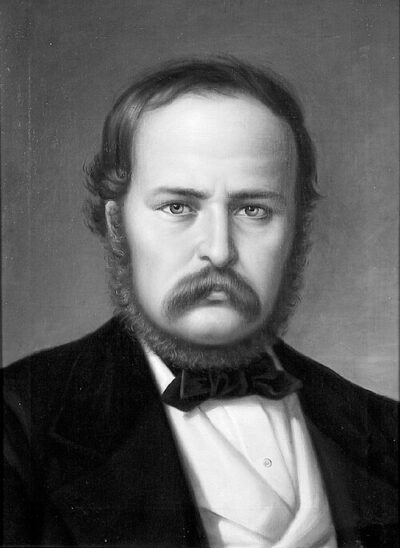
Andrei Mureșanu
Andrei Mureșanu was a Romanian writer. Born November 16, 1816, in Bistrița. Died October 24, 1863, in Brașov.
Facts
18 facts · 1 confirmed by two sources · 12 cited · 3 from one source · 2 where the sources disagree
What’s different
- Died: we show October 24, 1863 (Sources disagree). Wikipedia says October 12, 1863
- Died in: we show Brașov (Sources disagree). Wikidata also lists Sibiu
Where this comes from
Papalocal keeps its own record. It started from these sources; what each one said is kept here as it was copied, so a change on their side never changes this page by itself. Tap one to read its version.
What Wikidata says · copied November 18, 2026 · revision 2567372235
- Described as
- Romanian writer (1816–1863)
- Other names
- Andrei Mureşan
- Born
- November 16, 1816 · 1 reference
- Died
- October 24, 1863 · 1 reference
- Born in
- Bistrița · 1 reference
- Died in
- Brașov · 1 reference; Sibiu · 1 reference
- Citizen of
- Hungary
- Occupation
- poet · 2 references; writer · 2 references; translator · 2 references; composer; journalist · 2 references; political activist · 1 reference; revolutionary · 1 reference; opinion journalist · 1 reference
- Field
- poetry · 1 reference; journalism · 1 reference; translation · 1 reference; activism · 1 reference
- Religion
- Romanian Greek Catholic Church
- Wikipedias with a page
- 20
Wikidata item Q502292 (wikidata.org/wiki/Q502292), public domain (CC0). Copied November 18, 2026.
What Wikipedia says · copied November 18, 2026 · revision 1369985093
Andrei Mureșanu (Romanian pronunciation: [anˈdrej mureˈʃanu]; November 16, 1816 in Bistrița – October 12, 1863 in Brașov) was a Romanian poet and revolutionary of Transylvania.
Born in a family of a small business owner in the countryside, he studied philosophy and theology in Blaj. In 1838 he started working as a professor in Brașov. He published his first poetry in the magazine Foaie pentru minte, inimă și literatură (Paper for mind, heart and literature). He was one of the leading figures of the 1848 revolution in Transylvania, taking part in the Brașov delegation at the Blaj Assembly in May 1848. His poem Deșteaptă-te, române!, composition based on a popular tune of an old religious anthem, became the hymn of the revolutionaries. Nicolae Bălcescu named it "La Marseillaise of Romanians" for its ability to mobilize the people to fight. The poem later became the national anthem of Romania in 1990. He also wrote the Romanian-language version of the Kaiserhymne.
After the revolution, Mureșanu worked as a translator in Sibiu, had some patriotical works published in the Telegraful Român magazine. In 1862 his poetry was gathered in a single volume. Due to poor health conditions, he died in 1863 at Brașov. He is buried in the city’s Groaveri cemetery.
- Born, in its opening lines
- November 16, 1816
- Died, in its opening lines
- October 12, 1863
From the Wikipedia article “Andrei Mureșanu” (en.wikipedia.org/wiki/Andrei_Mureșanu), by its contributors, under CC BY-SA 4.0 (creativecommons.org/licenses/by-sa/4.0/). Copied November 18, 2026; not changed.
Confirmed Two sources agree. Cited One source, and it names where it got it. One source One source, without a reference of its own. Sources disagree The sources disagree. We show the best-supported value and keep theirs below.
