
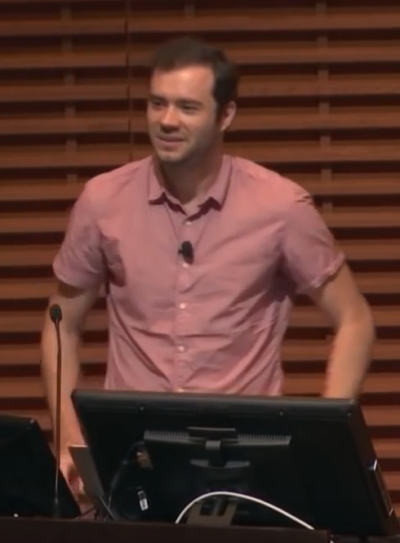
Andrej Karpathy
Andrej Karpathy is a Slovakian-Canadian AI researcher. Born October 23, 1986, in Bratislava. Educated at Stanford University.
Facts
12 facts · 1 confirmed by two sources · 5 cited · 6 from one source
Where this comes from
Papalocal keeps its own record. It started from these sources; what each one said is kept here as it was copied, so a change on their side never changes this page by itself. Tap one to read its version.
What Wikidata says · copied November 15, 2026 · revision 2563667266
- Described as
- Slovakian-Canadian AI researcher (born 1986)
- Born
- October 23, 1986 · 1 reference
- Born in
- Bratislava · 1 reference
- Citizen of
- Slovakia; Canada
- Occupation
- computer scientist · 1 reference; artificial intelligence researcher
- Worked for
- OpenAI (2 times) (2015–2024); Tesla (2017–2022) · 1 reference
- Education
- Stanford University (–2016) · 1 reference
- Field
- machine learning · 1 reference; computer vision · 1 reference
- Website
- https://karpathy.ai/ · 1 reference
- Wikipedias with a page
- 26
Wikidata item Q56037405 (wikidata.org/wiki/Q56037405), public domain (CC0). Copied November 15, 2026.
What Wikipedia says · copied November 15, 2026 · revision 1383628380
Andrej Karpathy (born 23 October 1986) is a Slovak-Canadian AI researcher, who co-founded and formerly worked at OpenAI, where he specialized in deep learning and computer vision. He also worked as the director of artificial intelligence and Autopilot Vision at Tesla, and in 2024 he founded Eureka Labs, an AI education platform. In 2026 he joined Anthropic as part of the pretraining team.
- Born, in its opening lines
- October 23, 1986
From the Wikipedia article “Andrej Karpathy” (en.wikipedia.org/wiki/Andrej_Karpathy), by its contributors, under CC BY-SA 4.0 (creativecommons.org/licenses/by-sa/4.0/). Copied November 15, 2026; not changed.
Confirmed Two sources agree. Cited One source, and it names where it got it. One source One source, without a reference of its own. Sources disagree The sources disagree. We show the best-supported value and keep theirs below.
