
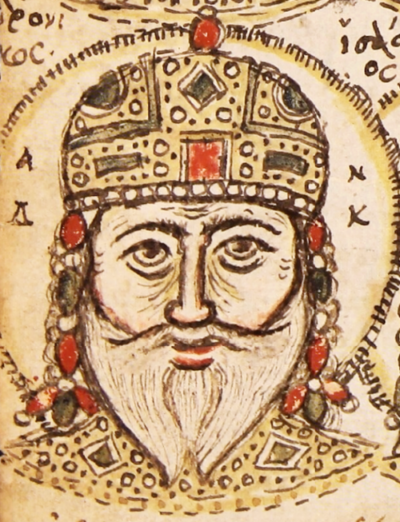
Andronikos I Komnenos was a Byzantine emperor. Born 1118, in Constantinople. Died September 12, 1185, in Constantinople. Positions held include Byzantine emperor (1183–1185).
Facts
19 facts · 0 confirmed by two sources · 5 cited · 14 from one source
Where this comes from
Papalocal keeps its own record. It started from these sources; what each one said is kept here as it was copied, so a change on their side never changes this page by itself. Tap one to read its version.
What Wikidata says · copied November 16, 2026 · revision 2569111547
- Described as
- Byzantine emperor (1118–1185)
- Other names
- Andronicus I Comnenus, Andronicus Comnenus
- Born
- 1118 · 3 references
- Died
- September 12, 1185 · 3 references
- Born in
- Constantinople · 4 references
- Died in
- Constantinople · 4 references
- Cause of death
- torture
- Citizen of
- Byzantine Empire · 3 references
- Occupation
- politician; military personnel; soldier
- Positions held
- Byzantine emperor (1183–1185)
- Spouse
- Agnes of France (1183–) · 2 references
- Children
- Alexios Komnenos; John Komnenos; Irene Komnene; Manuel Komnenos · 1 reference; Maria Komnene
- Father
- Isaac Komnenos
- Siblings
- John Tzelepes Komnenos; Anna Komnene
- Wikipedias with a page
- 57
Wikidata item Q41830 (wikidata.org/wiki/Q41830), public domain (CC0). Copied November 16, 2026.
What Wikipedia says · copied November 16, 2026 · revision 1383946615
Andronikos I Komnenos (Greek: Ἀνδρόνικος Κομνηνός, romanized: Andrónikos Komnēnós; c. 1118/1120 – 12 September 1185), Latinized as Andronicus I Comnenus, was Byzantine emperor from 1183 to 1185. A nephew of John II Komnenos (r. 1118–1143), Andronikos rose to fame in the reign of his cousin Manuel I Komnenos (r. 1143–1180), during which his life was marked by political failures, adventures, scandalous romances, and rivalry with the emperor.
After Manuel's death in 1180, the elderly Andronikos rose to prominence as the accession of the young Alexios II Komnenos led to power struggles in Constantinople. In 1182, Andronikos seized power in the capital, ostensibly as a guardian of the young emperor. Andronikos swiftly and ruthlessly eliminated his political rivals, including Alexios II's mother and regent, Maria of Antioch. In September 1183, Andronikos was crowned as co-emperor and had Alexios murdered, assuming power in his own name. Andronikos staunchly opposed the powerful Byzantine aristocracy and enacted brutal measures to curb their influence. Although he faced several revolts and the empire became increasingly unstable, his reforms had a favorable effect on the common citizenry. The capture of Thessaloniki by William II of Sicily in 1185 turned the people of Constantinople against Andronikos, who was captured and brutally murdered.
Andronikos was the last Byzantine emperor of the Komnenos dynasty (1081–1185). He was vilified as a tyrant by later Byzantine writers, with one historian calling him "Misophaes" (Ancient Greek: μισοφαής, lit. 'hater of sunlight') in reference to the great number of enemies he had blinded. The anti-aristocratic policies pursued by Andronikos destroyed the Komnenian system implemented by his predecessors. His reforms and policies were reversed by the succeeding Angelos dynasty (1185–1204), which contributed to the collapse of imperial central authority. When the Byzantine Empire was temporarily overthrown in the Fourth Crusade (1204), Andronikos' descendants through his eldest son Manuel established the Empire of Trebizond, where the Komnenoi continued to rule until 1461.
From the Wikipedia article “Andronikos I Komnenos” (en.wikipedia.org/wiki/Andronikos_I_Komnenos), by its contributors, under CC BY-SA 4.0 (creativecommons.org/licenses/by-sa/4.0/). Copied November 16, 2026; not changed.
Confirmed Two sources agree. Cited One source, and it names where it got it. One source One source, without a reference of its own. Sources disagree The sources disagree. We show the best-supported value and keep theirs below.
