
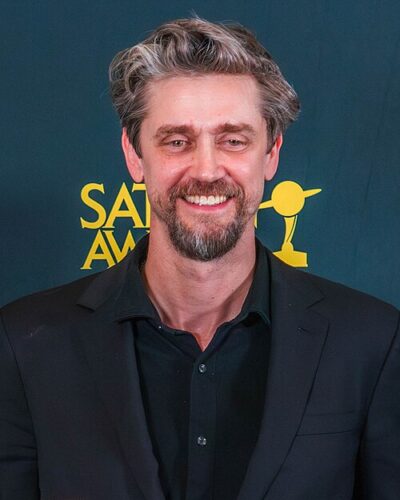
Andy Muschietti
Andy Muschietti is an Argentine film director and screenwriter. Born August 26, 1973, in Buenos Aires. Known for Música.
Facts
16 facts · 1 confirmed by two sources · 6 cited · 9 from one source
Where this comes from
Papalocal keeps its own record. It started from these sources; what each one said is kept here as it was copied, so a change on their side never changes this page by itself. Tap one to read its version.
What Wikidata says · copied November 15, 2026 · revision 2566764451
- Described as
- Argentine film director and screenwriter (born 1973)
- Other names
- Andrés Muschietti
- Born
- August 26, 1973
- Born in
- Buenos Aires · 1 reference
- Citizen of
- Argentina; United States
- Occupation
- film director · 1 reference; screenwriter · 1 reference; director · 1 reference; executive producer; film actor; actor · 1 reference
- Genre
- supernatural horror film; superhero film
- Known for
- Música
- Field
- film production · 1 reference
- Siblings
- Barbara Muschietti
- Height
- 1.95 m (6 ft 5 in)
- Wikipedias with a page
- 28
Wikidata item Q6385039 (wikidata.org/wiki/Q6385039), public domain (CC0). Copied November 15, 2026.
What Wikipedia says · copied November 15, 2026 · revision 1383059585
Andrés "Andy" Walter Muschietti (Spanish: [musˈkjeti]; born 26 August 1973) is an Argentine film director and screenwriter who had his breakthrough with the 2013 film Mama. He gained further recognition for directing both films in the It film series, the 2017 film adaptation of the Stephen King novel and its 2019 sequel, It Chapter Two. In 2023, he directed the DC Extended Universe film The Flash. In 2025, Muschietti developed and executive-produced the HBO series It: Welcome to Derry, of which he directed 4 episodes.
- Born, in its opening lines
- August 26, 1973
From the Wikipedia article “Andy Muschietti” (en.wikipedia.org/wiki/Andy_Muschietti), by its contributors, under CC BY-SA 4.0 (creativecommons.org/licenses/by-sa/4.0/). Copied November 15, 2026; not changed.
Confirmed Two sources agree. Cited One source, and it names where it got it. One source One source, without a reference of its own. Sources disagree The sources disagree. We show the best-supported value and keep theirs below.
