
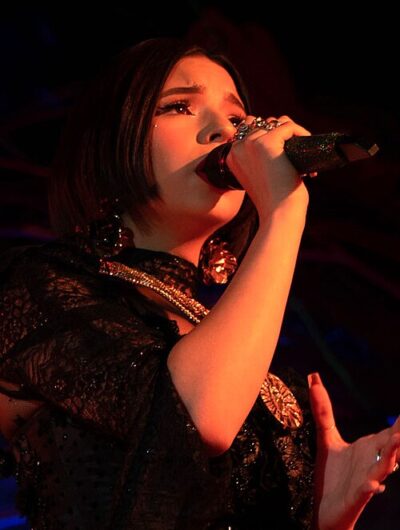
Ángela Aguilar is an American-Mexican singer. Born October 8, 2003, in Los Angeles.
Facts
12 facts · 1 confirmed by two sources · 4 cited · 7 from one source
Where this comes from
Papalocal keeps its own record. It started from these sources; what each one said is kept here as it was copied, so a change on their side never changes this page by itself. Tap one to read its version.
What Wikidata says · copied November 15, 2026 · revision 2557039795
- Described as
- American-Mexican singer (born 2003)
- Other names
- Ángela Aguilar Álvarez Alcalá, Ángela Aguilar Álvarez
- Born
- October 8, 2003 · 1 reference
- Born in
- Los Angeles · 1 reference
- Citizen of
- United States · 1 reference; Mexico · 1 reference
- Occupation
- recording artist; singer · 1 reference
- Genre
- mariachi · 1 reference
- Instrument
- piano · 1 reference; voice
- Father
- Pepe Aguilar · 1 reference
- Siblings
- Leonardo Aguilar; Emiliano Aguilar
- Wikipedias with a page
- 30
Wikidata item Q56162397 (wikidata.org/wiki/Q56162397), public domain (CC0). Copied November 15, 2026.
What Wikipedia says · copied November 15, 2026 · revision 1373311249
Ángela Aguilar Álvarez (born October 8, 2003) is a Mexican-American singer. She was born in Los Angeles while her mother was accompanying her father, Pepe Aguilar, on tour. Aguilar gained notable recognition after performing "La Llorona" at the 19th Annual Latin Grammy Awards in 2018. Her paternal grandparents are the actors and singers from the Golden Age of Mexican cinema, Antonio Aguilar and Flor Silvestre.
Her debut solo studio album, Primero Soy Mexicana (2018), was met with critical acclaim and success. She has been nominated for a Grammy Award and two Latin Grammy Awards, becoming one of the youngest artists nominated for both accolades.
- Born, in its opening lines
- October 8, 2003
From the Wikipedia article “Ángela Aguilar” (en.wikipedia.org/wiki/Ángela_Aguilar), by its contributors, under CC BY-SA 4.0 (creativecommons.org/licenses/by-sa/4.0/). Copied November 15, 2026; not changed.
Confirmed Two sources agree. Cited One source, and it names where it got it. One source One source, without a reference of its own. Sources disagree The sources disagree. We show the best-supported value and keep theirs below.
