
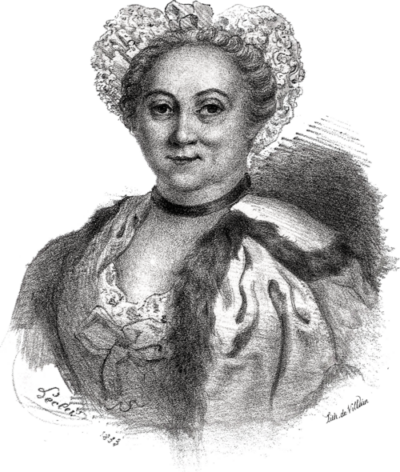
Angélique du Coudray
Angélique du Coudray was a French pioneering midwife. Born August 27, 1714, in Paris. Died April 16, 1794, in Bordeaux. Awards include 72 scientist women names on the Eiffel tower.
Facts
7 facts · 1 confirmed by two sources · 1 cited · 4 from one source · 1 where the sources disagree
What’s different
- Died: we show April 16, 1794 (Sources disagree). Wikipedia says April 17, 1794
Where this comes from
Papalocal keeps its own record. It started from these sources; what each one said is kept here as it was copied, so a change on their side never changes this page by itself. Tap one to read its version.
What Wikidata says · copied November 18, 2026 · revision 2567607738
- Described as
- French pioneering midwife
- Other names
- Angelique du Coudray, Angelique-Marie Leboursier Ducoudray, Angélique Marguerite Le Boursier du Coudray, Angélique Le Boursier
- Born
- August 27, 1714 · 1 reference
- Died
- April 16, 1794 · 1 reference
- Born in
- Paris · 1 reference
- Died in
- Bordeaux
- Citizen of
- France
- Occupation
- midwife
- Awards
- 72 scientist women names on the Eiffel tower
- Wikipedias with a page
- 20
Wikidata item Q2849879 (wikidata.org/wiki/Q2849879), public domain (CC0). Copied November 18, 2026.
What Wikipedia says · copied November 18, 2026 · revision 1383130106
Angélique Marguerite Le Boursier du Coudray, generally known as Angélique du Coudray, (27 August 1714 – 17 April 1794) was an influential, pioneering French midwife. Gaining fame at a time when men were taking over the field, she rose from middle-class origins to become noticed and commissioned by King Louis XV himself.
In early 2026 it was announced that du Coudray was one of the 72 women to have their names added to the Eiffel Tower to join the 72 men already included.
- Born, in its opening lines
- August 27, 1714
- Died, in its opening lines
- April 17, 1794
From the Wikipedia article “Angélique du Coudray” (en.wikipedia.org/wiki/Angélique_du_Coudray), by its contributors, under CC BY-SA 4.0 (creativecommons.org/licenses/by-sa/4.0/). Copied November 18, 2026; not changed.
Confirmed Two sources agree. Cited One source, and it names where it got it. One source One source, without a reference of its own. Sources disagree The sources disagree. We show the best-supported value and keep theirs below.
