
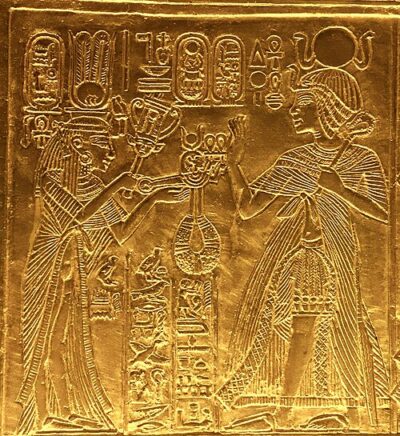
Ankhesenamun
Ankhesenamun was a sister consort of Tutankhamun. Born 1348 BC, in Thebes. Died 1322 BC, in Memphis. Positions held include Great Royal Wife.
Facts
23 facts · 0 confirmed by two sources · 2 cited · 21 from one source
Where this comes from
Papalocal keeps its own record. It started from these sources; what each one said is kept here as it was copied, so a change on their side never changes this page by itself. Tap one to read its version.
What Wikidata says · copied November 16, 2026 · revision 2521284549
- Described as
- sister consort of Tutankhamun
- Other names
- Ankhesenamen, Ankhes-en-pa-aten
- Born
- 1348 BC
- Died
- 1322 BC
- Born in
- Thebes
- Died in
- Memphis
- Buried in
- Valley of the Kings
- Citizen of
- Ancient Egypt
- Occupation
- queen · 1 reference
- Positions held
- Great Royal Wife
- Spouse
- Tutankhamun · 1 reference; Ay
- Children
- Ankhesenpaaten Tasherit; 317a mummy; 317b mummy
- Father
- Akhenaten
- Mother
- Nefertiti
- Siblings
- Tutankhamun; Neferneferuaten Tasherit; Neferneferure; Setepenre; Meritaten Tasherit; Ankhesenpaaten Tasherit; Meritaten; Meketaten
- Wikipedias with a page
- 49
Wikidata item Q230863 (wikidata.org/wiki/Q230863), public domain (CC0). Copied November 16, 2026.
What Wikipedia says · copied November 16, 2026 · revision 1376055252
Ankhesenamun (ˁnḫ-s-n-imn, "Her Life Is of Amun"; c. 1348 BCE or c. 1342 BCE – after 1322 BCE) was an ancient Egyptian queen who lived during the 18th Dynasty of Egypt. Born Ankhesenpaaten (ˁnḫ.s-n-pꜣ-itn, "she lives for the Aten"), she was the third of six known daughters of the Egyptian Pharaoh Akhenaten and his Great Royal Wife Nefertiti. She became the Great Royal Wife of Tutankhamun. The change in her name reflects the changes in ancient Egyptian religion during her lifetime after her father's death. Her youth is well documented in the ancient reliefs and paintings of the reign of her parents.
Ankhesenamun's activity as the Great Royal Wife of Pharaoh Tutankhamun is not well documented. Initially, she may have been married to her father and it is possible that, upon the death of Tutankhamun, she was married briefly to Tutankhamun's successor, Ay, who is believed by some to be her maternal grandfather.
DNA test results on mummies discovered in KV21 were released in February 2010, which has given rise to speculation that one of two late 18th Dynasty queens buried in that tomb could be Ankhesenamun. Because of their DNA, both mummies are thought to be members of that ruling house.
From the Wikipedia article “Ankhesenamun” (en.wikipedia.org/wiki/Ankhesenamun), by its contributors, under CC BY-SA 4.0 (creativecommons.org/licenses/by-sa/4.0/). Copied November 16, 2026; not changed.
Confirmed Two sources agree. Cited One source, and it names where it got it. One source One source, without a reference of its own. Sources disagree The sources disagree. We show the best-supported value and keep theirs below.
