
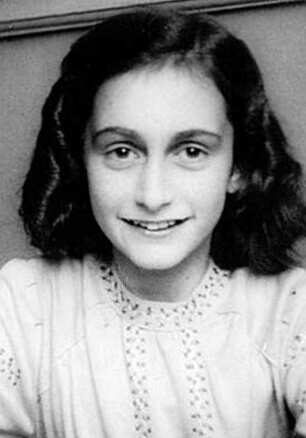
Anne Frank
Anne Frank was a German-born Dutch Jewish diarist and Holocaust victim. Born June 12, 1929, in Maingau Clinic of the Red Cross. Died February 1945, in Bergen-Belsen concentration camp. Known for Diary of Anne Frank and Tales from the Secret Annex. Educated at 6th Montessori School Anne Frank and Amsterdam Jewish Lyceum. Awards include Bancarella Selection Prize.
Facts
29 facts · 1 confirmed by two sources · 11 cited · 16 from one source · 1 where the sources disagree
What’s different
- Died: we show February 1945 (Sources disagree). Wikipedia says March 1945
Where this comes from
Papalocal keeps its own record. It started from these sources; what each one said is kept here as it was copied, so a change on their side never changes this page by itself. Tap one to read its version.
What Wikidata says · copied November 16, 2026 · revision 2568266539
- Described as
- German-born Dutch Jewish diarist and Holocaust victim (1929–1945)
- Other names
- Anne Maries Frank, Anna M Frank, Annelies Marie Frank, Anne M. Frank, Anna Frank
- Born
- June 12, 1929 · 21 references
- Died
- February 1945 · 3 references
- Born in
- Maingau Clinic of the Red Cross · 3 references
- Died in
- Bergen-Belsen concentration camp · 3 references
- Buried in
- Bergen-Belsen concentration camp
- Cause of death
- typhus · 3 references
- Name at birth
- Annelies Marie Frank
- Citizen of
- Nazi Germany (–1941) · 1 reference; statelessness (1941–) · 1 reference; Weimar Republic · 1 reference
- Occupation
- diarist · 1 reference
- Education
- 6th Montessori School Anne Frank · 1 reference; Amsterdam Jewish Lyceum · 1 reference; Preparatory school No. 51
- Known for
- Diary of Anne Frank; Tales from the Secret Annex
- Awards
- Bancarella Selection Prize (1955) · 1 reference
- Field
- diary · 1 reference
- Father
- Otto Heinrich Frank · 1 reference
- Mother
- Edith Frank-Holländer
- Siblings
- Margot Frank · 1 reference; Eva Schloss
- Religion
- Reform Judaism
- Lived in
- Frankfurt (1929–1933) · 1 reference; Merwedeplein 37-II (1934–1942); annex Prinsengracht 263 (1942–1944); Bergen-Belsen concentration camp (1944–1945); Aachen-Mitte
- Website
- https://www.annefrank.org
- Wikipedias with a page
- 172
Wikidata item Q4583 (wikidata.org/wiki/Q4583), public domain (CC0). Copied November 16, 2026.
What Wikipedia says · copied November 16, 2026 · revision 1382026870
Annelies Marie Frank (12 June 1929 – c. February or March 1945) was a German-born Jewish diarist and Holocaust victim. She gained worldwide notability posthumously for keeping a diary documenting her life in hiding during the German occupation of the Netherlands. In the diary, she regularly described her family's everyday life in their hiding place in a secret annex in Amsterdam from 1942 until their arrest in 1944.
Anne Frank was born in Frankfurt, Germany, in 1929. In 1934, when she was four-and-a-half, Anne and her family moved to Amsterdam after Adolf Hitler of the Nazi Party was appointed to govern Germany. By May 1940, her family were trapped in Amsterdam due to Germany's occupation. Frank lost her German citizenship in 1941 and became stateless. Despite spending most of her life in the Netherlands and being a de facto Dutch national, she never officially became a Dutch citizen. As persecution of the Jewish population increased in July 1942, the family went into hiding in a secret annex concealed behind a bookcase in the building where Frank's father, Otto Frank, worked. The family were arrested two years later by the Gestapo, on 4 August 1944.
Following their arrest, the Franks were transported to Westerbork transit camp and on to Auschwitz-Birkenau. On 1 November 1944, Anne Frank and her sister Margot were transferred from Auschwitz to the Bergen-Belsen concentration camp, where they died (presumably of typhus) a few months later. The Red Cross estimated that they died in March 1945, with Dutch authorities setting 31 March as the official date. Later research has alternatively suggested that they may have died in February or early March.
Otto Frank, the only Holocaust survivor in the family, returned to Amsterdam after World War II to find that Anne's diary had been saved by his secretaries, Miep Gies and Bep Voskuijl. Moved by his daughter's repeated wishes to be an author, Otto Frank published her diary in 1947. It was translated from its original Dutch version and first published in English in 1952 as The Diary of a Young Girl (originally Het Achterhuis in Dutch, lit. 'the back house'; English: The Secret Annex) and has since been translated into over 70 languages. With the publication of The Diary of a Young Girl, Anne became one of the most-discussed Jewish victims of the Holocaust. One of the world's best-known books, Anne's diary is the basis for several plays and films.
- Born, in its opening lines
- June 12, 1929
- Died, in its opening lines
- March 1945
From the Wikipedia article “Anne Frank” (en.wikipedia.org/wiki/Anne_Frank), by its contributors, under CC BY-SA 4.0 (creativecommons.org/licenses/by-sa/4.0/). Copied November 16, 2026; not changed.
Confirmed Two sources agree. Cited One source, and it names where it got it. One source One source, without a reference of its own. Sources disagree The sources disagree. We show the best-supported value and keep theirs below.
