
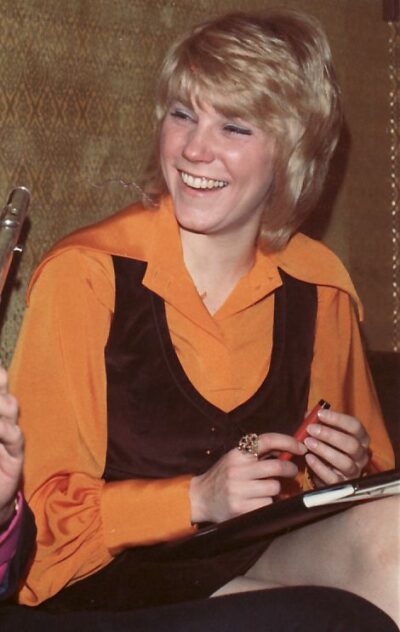
Anne Murray
Anne Murray is a Canadian singer. Born June 20, 1945, in Springhill. Educated at Mount Saint Vincent University and University of New Brunswick. Awards include Companion of the Order of Canada, Grammy Award for Best Female Country Vocal Performance (3 times) and Grammy Award for Best Female Pop Vocal Performance.
Facts
32 facts · 1 confirmed by two sources · 7 cited · 24 from one source
Where this comes from
Papalocal keeps its own record. It started from these sources; what each one said is kept here as it was copied, so a change on their side never changes this page by itself. Tap one to read its version.
What Wikidata says · copied November 15, 2026 · revision 2567407661
- Described as
- Canadian singer
- Other names
- Morna Murray, Morna Anne Murray
- Born
- June 20, 1945 · 3 references
- Born in
- Springhill · 1 reference
- Name at birth
- Morna Anne Murray
- Citizen of
- Canada · 1 reference
- Occupation
- singer · 1 reference
- Education
- Mount Saint Vincent University; University of New Brunswick
- Genre
- country music · 2 references; soft rock · 2 references; pop music · 1 reference; adult contemporary music · 3 references; country pop · 2 references
- Instrument
- guitar; voice
- Record label
- Capitol Records; Liberty Records; EMI
- Awards
- Companion of the Order of Canada; Grammy Award for Best Female Country Vocal Performance (3 times) (1974, 1980, 1983); Grammy Award for Best Female Pop Vocal Performance (1978); Juno Award for Children's Album of the Year (1979); Juno Award for Single of the Year (2 times) (1980, 1981); Juno Award for Album of the Year (2 times) (1980, 1981); Favorite Country Single (1982); Canadian Music Hall of Fame (1993); Canada's Walk of Fame (1998) · 1 reference; star on Hollywood Walk of Fame · 1 reference; Order of Nova Scotia
- Children
- Dawn Langstroth
- Lived in
- Springhill; Toronto
- Website
- http://www.annemurray.com
- Wikipedias with a page
- 31
Wikidata item Q236543 (wikidata.org/wiki/Q236543), public domain (CC0). Copied November 15, 2026.
What Wikipedia says · copied November 15, 2026 · revision 1383359232
Morna Anne Murray (born June 20, 1945) is a Canadian retired country, pop and adult contemporary music singer who has sold over 55 million album copies worldwide during her over 40-year career. Murray has won four Grammys including the Grammy Award for Best Female Pop Vocal Performance in 1978.
Murray was the first Canadian female solo singer to reach No. 1 on the U.S. charts and also the first to earn a Gold record for one of her signature songs, "Snowbird" (1970). She is often cited as one of the female Canadian artists who paved the way for other internationally successful Canadian artists such as k.d. lang, Céline Dion, and Shania Twain. Murray is well known for her Grammy Award-winning 1978 number-one hit (in several countries) "You Needed Me", and is the first woman and the first Canadian to win Album of the Year at the 1984 Country Music Association Awards for her Gold-plus 1983 album A Little Good News.
Besides four Grammys, Murray has received a record 25 Juno Awards, three American Music Awards, three Country Music Association Awards, and three Canadian Country Music Association Awards. She has been inducted into the Canadian Country Music Hall of Fame, the Juno Hall of Fame, the Canadian Songwriters Hall of Fame, and Canadian Broadcast Hall of Fame. She is a member of the Country Music Hall of Fame Walkway of Stars in Nashville and has her own star on the Hollywood Walk of Fame in Los Angeles and on Canada's Walk of Fame in Toronto.
In 2011, Billboard ranked her 10th on their list of the 50 Biggest Adult Contemporary Artists Ever. In 2026, Grunge named her Most Beautiful voice in Soft Rock history.l
- Born, in its opening lines
- June 20, 1945
From the Wikipedia article “Anne Murray” (en.wikipedia.org/wiki/Anne_Murray), by its contributors, under CC BY-SA 4.0 (creativecommons.org/licenses/by-sa/4.0/). Copied November 15, 2026; not changed.
Confirmed Two sources agree. Cited One source, and it names where it got it. One source One source, without a reference of its own. Sources disagree The sources disagree. We show the best-supported value and keep theirs below.
