
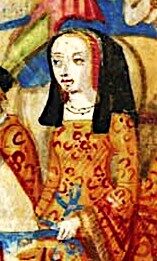
Anne of Foix-Candale
Anne of Foix-Candale was a Queen Consort of Hungary, Bohemia and Croatia, English subject as countess of Candale (Kendal), descendant of the house de la Pole. Born 1484, in Foix. Died July 26, 1506, in Buda. Positions held include queen consort (1502–1506).
Facts
18 facts · 2 confirmed by two sources · 0 cited · 16 from one source
Where this comes from
Papalocal keeps its own record. It started from these sources; what each one said is kept here as it was copied, so a change on their side never changes this page by itself. Tap one to read its version.
What Wikidata says · copied November 16, 2026 · revision 2553983561
- Described as
- Queen Consort of Hungary, Bohemia and Croatia, English subject as countess of Candale (Kendal), descendant of the house de la Pole (1484-1506)
- Other names
- Anne of Kendal, Anna of Foix-Candale
- Born
- 1484
- Died
- July 26, 1506
- Born in
- Foix · 1 reference
- Died in
- Buda
- Buried in
- Székesfehérvár Basilica (1516); Saint Sigismund Church in Buda (1506)
- Cause of death
- childbirth
- Citizen of
- France
- Occupation
- sovereign
- Positions held
- queen consort (1502–1506)
- Spouse
- Vladislaus II of Bohemia and Hungary (1502–1506) · 1 reference
- Children
- Anne of Bohemia and Hungary; Louis II of Hungary
- Father
- Gaston II de Foix, Count of Candale
- Mother
- Catherine of Foix, Countess of Candale
- Siblings
- Gaston III de Foix-Candale; Francis of Foix-Candale; Jean de Foix
- Wikipedias with a page
- 37
Wikidata item Q231126 (wikidata.org/wiki/Q231126), public domain (CC0). Copied November 16, 2026.
What Wikipedia says · copied November 16, 2026 · revision 1372882765
Anne of Foix (1484 – 26 July 1506) was Queen of Hungary and Bohemia as the third wife of King Vladislaus II.
- Born, in its opening lines
- 1484
- Died, in its opening lines
- July 26, 1506
From the Wikipedia article “Anne of Foix” (en.wikipedia.org/wiki/Anne_of_Foix), by its contributors, under CC BY-SA 4.0 (creativecommons.org/licenses/by-sa/4.0/). Copied November 16, 2026; not changed.
Confirmed Two sources agree. Cited One source, and it names where it got it. One source One source, without a reference of its own. Sources disagree The sources disagree. We show the best-supported value and keep theirs below.
