
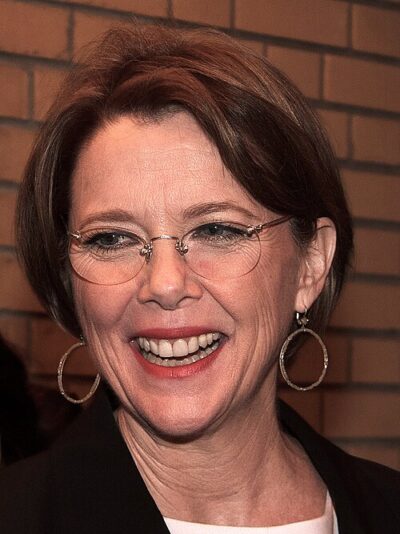
Annette Bening
Annette Bening is an American actress. Born May 29, 1958, in Topeka. Educated at San Francisco State University and San Diego Mesa College. Awards include Donostia Award, Theatre World Award and Crystal Award.
Facts
23 facts · 1 confirmed by two sources · 6 cited · 16 from one source
Where this comes from
Papalocal keeps its own record. It started from these sources; what each one said is kept here as it was copied, so a change on their side never changes this page by itself. Tap one to read its version.
What Wikidata says · copied November 13, 2026 · revision 2565581997
- Described as
- American actress (born 1958)
- Other names
- Annette Carol Bening
- Born
- May 29, 1958 · 6 references
- Born in
- Topeka
- Citizen of
- United States
- Occupation
- actor; voice actor; stage actor; television actor; film actor · 1 reference
- Education
- San Francisco State University; San Diego Mesa College; Patrick Henry High School · 1 reference
- Member of
- SAG-AFTRA
- Awards
- Donostia Award (2004); Theatre World Award (1987) · 1 reference; Crystal Award (2011) · 1 reference; BAFTA Award for Best Actress in a Leading Role · 1 reference; star on Hollywood Walk of Fame (2006) · 2 references; Hasty Pudding Woman of the Year (2024); Jane Fonda Humanitarian Award (2024) · 1 reference; Screen Actors Guild Award for Outstanding Performance by a Female Actor in a Leading Role
- Spouse
- Warren Beatty (1992–) · 1 reference
- Children
- Ella Beatty; Isabel Beatty
- Wikipedias with a page
- 72
Wikidata item Q190602 (wikidata.org/wiki/Q190602), public domain (CC0). Copied November 13, 2026.
What Wikipedia says · copied November 13, 2026 · revision 1383092518
Annette Carol Bening (born May 29, 1958) is an American actress. With a career spanning over four decades, she is known for her versatile work across screen and stage. Bening has received numerous accolades, including a BAFTA Award, two Actor Awards, and two Golden Globe Awards, in addition to nominations for five Academy Awards, two Tony Awards, and a Primetime Emmy Award, making her one of few artists nominated for the Triple Crown of Acting without winning.
A graduate of San Francisco State University and the American Conservatory Theater, Bening started her career on stage with the Colorado Shakespeare Festival company in 1980, and played Lady Macbeth in 1984 at the American Conservatory Theater. She made her Broadway debut in the Tina Howe play Coastal Disturbances (1987) for which she received a nomination for the Tony Award for Best Featured Actress in a Play. Making her film debut in 1988, she gained further recognition for her role in The Grifters (1990), for which she received her first Academy Award nomination. This acclaim continued throughout the 1990s and 2000s with further Oscar-nominated performances in the comedy-dramas American Beauty (1999) and Being Julia (2004), which respectively won her the BAFTA and Golden Globe for Best Actress. Bening's performance as the title character in the British television film Mrs. Harris (2005) earned her a nomination for the Primetime Emmy Award for Outstanding Lead Actress in a Miniseries or Movie.
In following decades, Bening received two additional Oscar nominations for her leading roles as a lesbian mother in The Kids Are All Right (2010) and swimmer Diana Nyad in the Netflix biographical film Nyad (2023), the former of which also won her a Golden Globe. She returned to Broadway in the revival of Arthur Miller's All My Sons (2019) earning another Tony nomination for Best Actress in a Play. Her other roles during this period include in the films 20th Century Women (2016), Film Stars Don't Die in Liverpool (2017), Captain Marvel (2019) and Death on the Nile (2022), the miniseries Apples Never Fall (2024) and the series Dutton Ranch (2026).
- Born, in its opening lines
- May 29, 1958
From the Wikipedia article “Annette Bening” (en.wikipedia.org/wiki/Annette_Bening), by its contributors, under CC BY-SA 4.0 (creativecommons.org/licenses/by-sa/4.0/). Copied November 13, 2026; not changed.
Confirmed Two sources agree. Cited One source, and it names where it got it. One source One source, without a reference of its own. Sources disagree The sources disagree. We show the best-supported value and keep theirs below.
