
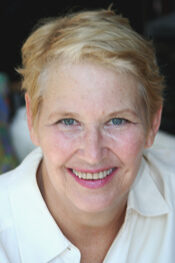
Annie Dillard
Annie Dillard was an American writer. Born April 30, 1945, in Pittsburgh. Died September 15, 2026, in Wellfleet. Known for The Maytrees, Pilgrim at Tinker Creek and Teaching a Stone to Talk. Educated at Hollins University and The Ellis School. Awards include Guggenheim Fellowship, PEN/Diamonstein-Spielvogel Award for the Art of the Essay and Pulitzer Prize for General Nonfiction.
Facts
35 facts · 2 confirmed by two sources · 22 cited · 11 from one source
Where this comes from
Papalocal keeps its own record. It started from these sources; what each one said is kept here as it was copied, so a change on their side never changes this page by itself. Tap one to read its version.
What Wikidata says · copied November 15, 2026 · revision 2557775526
- Described as
- American writer (1945–2026)
- Other names
- Annie Doak
- Born
- April 30, 1945 · 4 references
- Died
- September 15, 2026 · 1 reference
- Born in
- Pittsburgh · 2 references
- Died in
- Wellfleet · 1 reference
- Name at birth
- Meta Ann Doak
- Citizen of
- United States · 2 references
- Occupation
- poet · 2 references; novelist · 1 reference; university teacher; essayist · 2 references; writer · 1 reference
- Worked for
- Wesleyan University (1980–2001) · 1 reference; Western Washington University (1975–1979) · 1 reference
- Education
- Hollins University (1967–1968) · 1 reference; The Ellis School · 1 reference; Pittsburgh Public Schools
- Member of
- American Academy of Arts and Letters (1999–) · 1 reference; American Academy of Arts and Sciences (2013–) · 1 reference; Phi Beta Kappa Society (1966–) · 1 reference; PEN America · 1 reference
- Known for
- The Maytrees · 1 reference; Pilgrim at Tinker Creek · 1 reference; Teaching a Stone to Talk · 1 reference
- Awards
- Guggenheim Fellowship (1985) · 2 references; PEN/Diamonstein-Spielvogel Award for the Art of the Essay (2000) · 1 reference; Pulitzer Prize for General Nonfiction (1975) · 1 reference; Connecticut Women's Hall of Fame (1997) · 1 reference; National Humanities Medal (2014) · 2 references; Western States Book Award (1988) · 1 reference; Bollingen Prize (1984) · 1 reference
- Field
- poetry; essay
- Spouse
- Robert D. Richardson (1988–2020) · 1 reference; R. H. W. Dillard (1965–1975)
- Website
- http://www.anniedillard.com/ · 1 reference
- Wikipedias with a page
- 31
Wikidata item Q176558 (wikidata.org/wiki/Q176558), public domain (CC0). Copied November 15, 2026.
What Wikipedia says · copied November 15, 2026 · revision 1382853496
Annie Dillard (née Doak; April 30, 1945 – September 15, 2026) was an American author, best known for her narrative prose in both fiction and nonfiction. She published works of poetry, essays, prose, and literary criticism, as well as two novels and one memoir. Her 1974 book Pilgrim at Tinker Creek won the 1975 Pulitzer Prize for General Nonfiction. From 1980, Dillard taught for 21 years in the English department of Wesleyan University, in Middletown, Connecticut.
- Born, in its opening lines
- April 30, 1945
- Died, in its opening lines
- September 15, 2026
From the Wikipedia article “Annie Dillard” (en.wikipedia.org/wiki/Annie_Dillard), by its contributors, under CC BY-SA 4.0 (creativecommons.org/licenses/by-sa/4.0/). Copied November 15, 2026; not changed.
Confirmed Two sources agree. Cited One source, and it names where it got it. One source One source, without a reference of its own. Sources disagree The sources disagree. We show the best-supported value and keep theirs below.
