
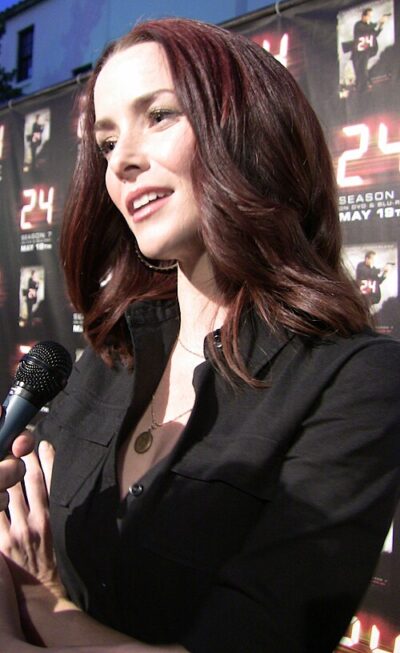
Annie Wersching
Annie Wersching was an American actress. Born March 28, 1977, in St. Louis. Died January 29, 2023, in Los Angeles. Educated at Millikin University and Crossroads College Preparatory School.
Facts
17 facts · 2 confirmed by two sources · 4 cited · 11 from one source
Where this comes from
Papalocal keeps its own record. It started from these sources; what each one said is kept here as it was copied, so a change on their side never changes this page by itself. Tap one to read its version.
What Wikidata says · copied November 13, 2026 · revision 2567224808
- Described as
- American actress (1977–2023)
- Born
- March 28, 1977 · 1 reference
- Died
- January 29, 2023 · 1 reference
- Born in
- St. Louis · 1 reference
- Died in
- Los Angeles · 1 reference
- Cause of death
- cancer · 1 reference
- Citizen of
- United States
- Occupation
- film actor; television actor; voice actor; video game actor; actor · 1 reference
- Education
- Millikin University; Crossroads College Preparatory School
- Spouse
- Stephen Full (2009–2023)
- Children
- Freddie Full; Ozzie Full; Archie Full
- Wikipedias with a page
- 41
Wikidata item Q239093 (wikidata.org/wiki/Q239093), public domain (CC0). Copied November 13, 2026.
What Wikipedia says · copied November 13, 2026 · revision 1376100061
Anne Wersching (March 28, 1977 – January 29, 2023) was an American actress. She was known for her television roles as Renee Walker in 24, Julia Brasher in Bosch, Emma Whitmore in Timeless, Dr. Kelly Neiman in Castle, Leslie Dean in Runaways, Lily Salvatore in The Vampire Diaries and Rosalind Dyer in The Rookie, as well as the voice and performance-capture for Tess in the video game The Last of Us.
- Born, in its opening lines
- March 28, 1977
- Died, in its opening lines
- January 29, 2023
From the Wikipedia article “Annie Wersching” (en.wikipedia.org/wiki/Annie_Wersching), by its contributors, under CC BY-SA 4.0 (creativecommons.org/licenses/by-sa/4.0/). Copied November 13, 2026; not changed.
Confirmed Two sources agree. Cited One source, and it names where it got it. One source One source, without a reference of its own. Sources disagree The sources disagree. We show the best-supported value and keep theirs below.
