
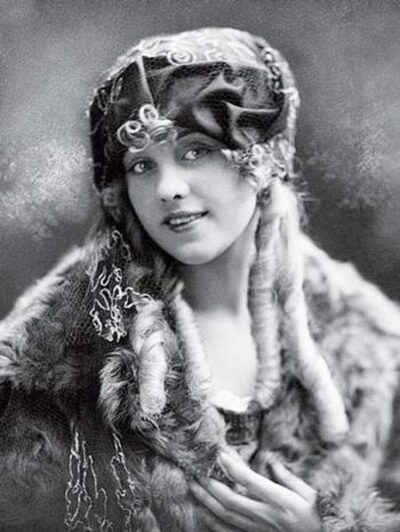
Anny Ondra was a Czech actress. Born May 15, 1902, in Tarnów. Died February 28, 1987, in Hollenstedt. Awards include German Film Award.
Facts
16 facts · 2 confirmed by two sources · 9 cited · 5 from one source
Where this comes from
Papalocal keeps its own record. It started from these sources; what each one said is kept here as it was copied, so a change on their side never changes this page by itself. Tap one to read its version.
What Wikidata says · copied November 17, 2026 · revision 2569054501
- Described as
- Czech actress (1902–1987)
- Born
- May 15, 1902 · 5 references
- Died
- February 28, 1987 · 5 references
- Born in
- Tarnów · 1 reference
- Died in
- Hollenstedt · 1 reference
- Buried in
- Saint Andreas Cemetery · 1 reference
- Cause of death
- stroke
- Name at birth
- Anna Sophie Ondráková
- Citizen of
- Austria–Hungary; Czechoslovakia
- Occupation
- film producer · 1 reference; film actor · 1 reference; actor · 2 references; musician · 1 reference
- Awards
- German Film Award
- Field
- film · 1 reference
- Spouse
- Max Schmeling (1933–1987) · 1 reference
- Wikipedias with a page
- 26
Wikidata item Q62618 (wikidata.org/wiki/Q62618), public domain (CC0). Copied November 17, 2026.
What Wikipedia says · copied November 17, 2026 · revision 1386225627
Anny Ondra (born Anna Sophie Ondráková; 15 May 1902 – 28 February 1987) was a Czech film actress and producer who worked in Czech, German, Austrian, French and British cinema.
Ondra became one of the leading comic actresses of Czechoslovak cinema in the early 1920s, particularly through her films with actor and director Karel Lamač. She appeared in Austrian productions from 1922 and established an international career during the later 1920s. After beginning to work regularly in German films in 1926, she became one of the most popular Czech-born actresses in the German film industry. In Britain, she starred in one of the first British sound feature films, Blackmail (1929), directed by Alfred Hitchcock, and has been described as the first "Hitchcock blonde". Her popularity in Germany peaked in the mid-1930s, when she appeared in major Ufa productions and was regularly featured in film-industry publicity and the popular press. She continued to appear in films until 1957.
Her career was largely associated with comic and light roles, although she occasionally undertook more substantial dramatic parts. Ondra, together with Lamač, screenwriter Václav Wasserman and cinematographer Otto Heller, formed what was known as the "Great Four" of interwar Czech cinema. She co-produced several films in Germany in the 1930s.
In 1933, she married German former European and world boxing champion Max Schmeling, with whom she lived in Germany until her death. They were a prominent celebrity couple in 1930s Germany, appearing at many official occasions and associating with high-ranking Nazis, although they did not give political speeches or endorsements for the regime. After the Second World War, both faced allegations of collaboration with Nazi Germany. Schmeling underwent denazification proceedings and was classified as exonerated; Ondra's own postwar status is unclear.
- Born, in its opening lines
- May 15, 1902
- Died, in its opening lines
- February 28, 1987
From the Wikipedia article “Anny Ondra” (en.wikipedia.org/wiki/Anny_Ondra), by its contributors, under CC BY-SA 4.0 (creativecommons.org/licenses/by-sa/4.0/). Copied November 17, 2026; not changed.
Confirmed Two sources agree. Cited One source, and it names where it got it. One source One source, without a reference of its own. Sources disagree The sources disagree. We show the best-supported value and keep theirs below.
