
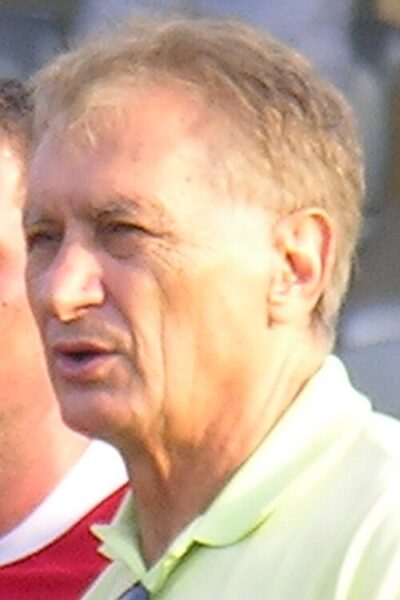
Antal Dunai is a Hungarian association football player. Born March 21, 1943, in Gara. Teams include Debreceni VSC (1976–1978), 1. Simmeringer SC (1981) and Újpest FC (1965–1976).
Facts
15 facts · 0 confirmed by two sources · 2 cited · 13 from one source
Where this comes from
Papalocal keeps its own record. It started from these sources; what each one said is kept here as it was copied, so a change on their side never changes this page by itself. Tap one to read its version.
What Wikidata says · copied November 18, 2026 · revision 2555349997
- Described as
- Hungarian association football player
- Born
- March 21, 1943 · 1 reference
- Born in
- Gara
- Citizen of
- Hungary
- Occupation
- association football player; association football coach; sports official
- Teams
- Debreceni VSC (1976–1978); 1. Simmeringer SC (1981); Újpest FC (1965–1976); Pécsi MFC (1961–1964); Hungary men's national football team (1969–1973); Real Betis Balompié
- Sport
- association football
- Nickname
- Dunai II · 1 reference
- Height
- 1.83 m (6 ft 0 in)
- Wikipedias with a page
- 22
Wikidata item Q507018 (wikidata.org/wiki/Q507018), public domain (CC0). Copied November 18, 2026.
What Wikipedia says · copied November 18, 2026 · revision 1381690331
Antal Dunai, also known as Dunai II (né Dujmov, 21 March 1943) is a Hungarian former footballer with Yugoslav origins. He became a first division player at Pécsi Dózsa, but he spent the majority of his career at Újpesti Dózsa from 1965 to 1977, when he moved to Debreceni VSC. He played 31 games and scored 9 goals for the Hungary national team. He is most famous for his participation in the gold medal winning Hungarian team on the 1968, and silver medal winning national team on the 1972 Olympics.
From the Wikipedia article “Antal Dunai” (en.wikipedia.org/wiki/Antal_Dunai), by its contributors, under CC BY-SA 4.0 (creativecommons.org/licenses/by-sa/4.0/). Copied November 18, 2026; not changed.
Confirmed Two sources agree. Cited One source, and it names where it got it. One source One source, without a reference of its own. Sources disagree The sources disagree. We show the best-supported value and keep theirs below.
