
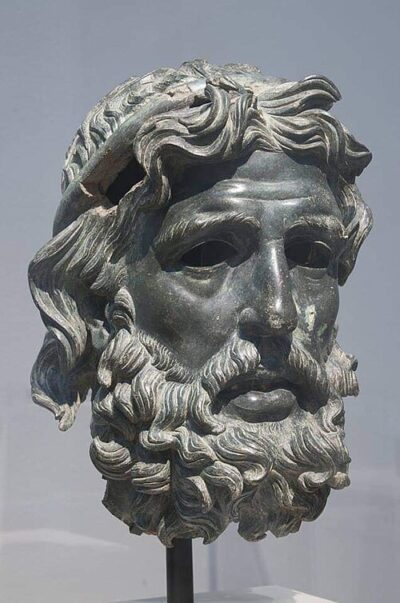
Antigonus I Monophthalmus
Antigonus I Monophthalmus was a Macedonian general, founder of Antigonid dynasty. Born 382 BC, in Elimiotis. Died 301 BC, in Ipsos. Positions held include strategos.
Facts
16 facts · 0 confirmed by two sources · 2 cited · 12 from one source · 2 where the sources disagree
What’s different
- Born: we show 382 BC (Sources disagree). Wikipedia says 382
- Died: we show 301 BC (Sources disagree). Wikipedia says 301
Where this comes from
Papalocal keeps its own record. It started from these sources; what each one said is kept here as it was copied, so a change on their side never changes this page by itself. Tap one to read its version.
What Wikidata says · copied November 16, 2026 · revision 2568402962
- Described as
- Macedonian general, founder of Antigonid dynasty (382–301 BC)
- Other names
- Antigonus I, Antigonus Monophthalmus, Antigonus
- Born
- 382 BC · 1 reference
- Died
- 301 BC · 1 reference
- Born in
- Elimiotis
- Died in
- Ipsos · 1 reference
- Citizen of
- Macedonia
- Occupation
- military leader · 2 references; military personnel
- Positions held
- strategos
- Spouse
- Stratonice
- Children
- Demetrius I of Macedon · 2 references; Philip
- Father
- Philippus
- Mother
- mother of Antigonus Monophtalmus
- Siblings
- Demetrius; Ptolemy; Marsyas of Pella
- Wikipedias with a page
- 52
Wikidata item Q200401 (wikidata.org/wiki/Q200401), public domain (CC0). Copied November 16, 2026.
What Wikipedia says · copied November 16, 2026 · revision 1381321165
Antigonus I Monophthalmus (Ancient Greek: Ἀντίγονος Μονόφθαλμος Antigonos Monophthalmos, "Antigonus the One-Eyed"; 382–301 BC) was a Macedonian Greek general and successor of Alexander the Great who founded the Antigonid dynasty, which ruled over Macedonia until its conquest by the Roman Republic in 168 BC. A prominent military leader in Alexander's army, he went on to control large parts of Alexander's former empire. He assumed the title of basileus (king) in 306 BC and reigned until his death.
Antigonus likely served under Philip II of Macedon. He took part in Alexander's invasion of Achaemenid Persia and was named satrap of Phrygia. After Alexander's death in 323 BC, he also received Pamphylia and Lycia in accordance with the Partition of Babylon. However, he later incurred the enmity of Perdiccas, the regent of Alexander's empire, and was driven from Phrygia. He fled to Greece and formed an alliance with Antipater, later joined by Ptolemy, against Perdiccas. Perdiccas was murdered by his own officers in 320 BC, and Antipater was elected the new regent.
During a series of wars between Alexander's successors, Antigonus briefly emerged as the most powerful of the Diadochi, ruling over Greece, Asia Minor, Syria, Phoenicia and northern Mesopotamia. Cassander, Seleucus, Ptolemy and Lysimachus formed a coalition against him, which culminated in his decisive defeat and death at the Battle of Ipsus in 301 BC. His kingdom was divided up by Lysimachus and Seleucus, but his son Demetrius survived and went on to seize control of Macedonia in 294 BC.
- Born, in its opening lines
- 382
- Died, in its opening lines
- 301
From the Wikipedia article “Antigonus I Monophthalmus” (en.wikipedia.org/wiki/Antigonus_I_Monophthalmus), by its contributors, under CC BY-SA 4.0 (creativecommons.org/licenses/by-sa/4.0/). Copied November 16, 2026; not changed.
Confirmed Two sources agree. Cited One source, and it names where it got it. One source One source, without a reference of its own. Sources disagree The sources disagree. We show the best-supported value and keep theirs below.
