
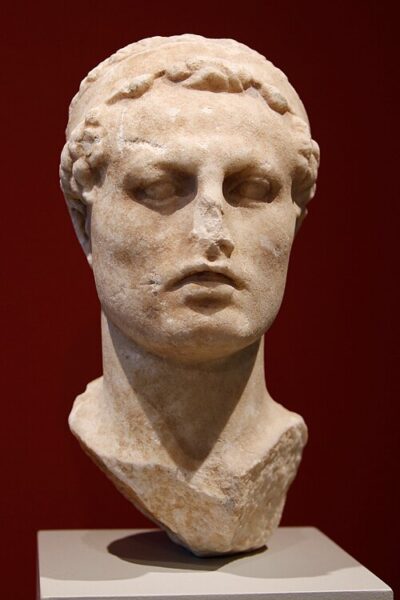
Antiochus IV Epiphanes
Antiochus IV Epiphanes was a king of the Seleucid Empire. Born 215 BC. Died 164 BC. Positions held include Seleucid ruler (-175–-164).
Facts
17 facts · 0 confirmed by two sources · 3 cited · 14 from one source
Where this comes from
Papalocal keeps its own record. It started from these sources; what each one said is kept here as it was copied, so a change on their side never changes this page by itself. Tap one to read its version.
What Wikidata says · copied November 16, 2026 · revision 2568843669
- Described as
- king of the Seleucid Empire (175–164 BC)
- Other names
- Antiochus IV
- Born
- 215 BC · 1 reference
- Died
- 164 BC · 1 reference
- Citizen of
- Seleucid Empire
- Occupation
- aristocrat
- Positions held
- Seleucid ruler (-175–-164)
- Spouse
- Laodice IV
- Children
- Antiochus V · 3 references; Laodice VI; Alexander Balas; Laodice
- Father
- Antiochus III the Great · 3 references
- Mother
- Laodice III
- Siblings
- Seleucus IV Philopator; Laodice IV; Cleopatra I Syra; Antiochis · 1 reference; Antiochus · 1 reference
- Wikipedias with a page
- 57
Wikidata item Q3356 (wikidata.org/wiki/Q3356), public domain (CC0). Copied November 16, 2026.
What Wikipedia says · copied November 16, 2026 · revision 1382779307
Antiochus IV Epiphanes (c. 215 BC–November/December 164 BC) was king of the Seleucid Empire from 175 BC until his death in 164 BC. Notable events during Antiochus' reign include his near-conquest of Ptolemaic Egypt, his persecution of the Jews of Judea and Samaria, and the rebellion of the Jewish Maccabees.
The son of King Antiochus III the Great, Antiochus IV’s accession to the throne was controversial, as he was seen as a usurper by some. After the death of his brother Seleucus IV Philopator in 175 BC, the "true" heir should have been Seleucus's son Demetrius I. However, Demetrius I was very young and a hostage in Rome at the time, and Antiochus seized the opportunity to declare himself king instead, successfully rallying enough of the Greek ruling class in Antioch to support his claim. This helped set a destabilizing trend in the Seleucid Empire in subsequent generations, as an increasing number of claimants tried to usurp the throne. After his own death, power struggles between competing lines of the ruling dynasty heavily contributed to the collapse of the empire. Antiochus's often eccentric behavior and capricious actions led some of his contemporaries to call him Epimanes ("The Mad"). He is often taken as being a prototype of the Antichrist in certain forms of Christianity.
From the Wikipedia article “Antiochus IV Epiphanes” (en.wikipedia.org/wiki/Antiochus_IV_Epiphanes), by its contributors, under CC BY-SA 4.0 (creativecommons.org/licenses/by-sa/4.0/). Copied November 16, 2026; not changed.
Confirmed Two sources agree. Cited One source, and it names where it got it. One source One source, without a reference of its own. Sources disagree The sources disagree. We show the best-supported value and keep theirs below.
