
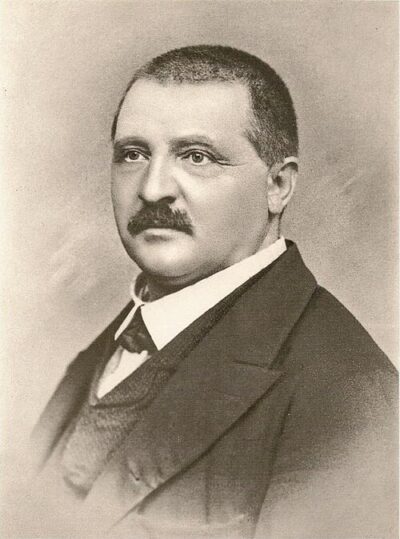
Anton Bruckner
Anton Bruckner was an Austrian composer. Born September 4, 1824, in Ansfelden. Died October 11, 1896, in Vienna. Known for Symphony No. 3, Symphony No. 4 and Symphony No. 5. Educated at University of Music and Performing Arts Vienna. Awards include Knight's Cross of the Order of Franz Joseph and honorary doctor of the University of Vienna.
Facts
40 facts · 2 confirmed by two sources · 7 cited · 31 from one source
Where this comes from
Papalocal keeps its own record. It started from these sources; what each one said is kept here as it was copied, so a change on their side never changes this page by itself. Tap one to read its version.
What Wikidata says · copied November 16, 2026 · revision 2568953057
- Described as
- Austrian composer (1824-1896)
- Other names
- Josef Anton Bruckner, Bruckner, Joseph Anton Bruckner
- Born
- September 4, 1824 · 17 references
- Died
- October 11, 1896 · 15 references
- Born in
- Ansfelden · 4 references
- Died in
- Vienna · 5 references
- Citizen of
- Austrian Empire; Cisleithania
- Occupation
- composer · 2 references; musicologist; music theorist; music educator; organist · 1 reference; university teacher; teacher · 1 reference; conductor · 1 reference
- Worked for
- University of Vienna; University of Music and Performing Arts Vienna · 1 reference
- Education
- University of Music and Performing Arts Vienna
- Member of
- Katholische Österreichische Studentenverbindung Austria-Wien · 1 reference
- Genre
- classical music; symphony
- Instrument
- organ; piano
- Known for
- Symphony No. 3; Symphony No. 4; Symphony No. 5; Symphony No. 6; Symphony No. 7; Symphony No. 8; Symphony No. 9; Symphony No. 2; Symphony in D minor; Symphony No. 1
- Awards
- Knight's Cross of the Order of Franz Joseph; honorary doctor of the University of Vienna · 1 reference
- Field
- performing arts
- Father
- Anton Bruckner · 1 reference
- Mother
- Theresia Helm · 1 reference
- Religion
- Catholicism
- Lived in
- St. Florian Monastery; Vienna
- Wikipedias with a page
- 92
Wikidata item Q81752 (wikidata.org/wiki/Q81752), public domain (CC0). Copied November 16, 2026.
What Wikipedia says · copied November 16, 2026 · revision 1384883193
Joseph Anton Bruckner (; German: [ˈantoːn ˈbʁʊknɐ] ; 4 September 1824 – 11 October 1896) was an Austrian composer and organist best known for his symphonies and sacred music, which includes Masses, Te Deum and motets. The symphonies are considered emblematic of the final stage of Austro-German Romanticism because of their rich harmonic language, strongly polyphonic character, and considerable length. Bruckner's compositions helped to define contemporary musical radicalism, owing to their dissonances, unprepared modulations, and roving harmonies.
Unlike other musical radicals such as Richard Wagner and Hugo Wolf, Bruckner showed respect, even humility, before other famous musicians, Wagner in particular. This apparent dichotomy between Bruckner the man and Bruckner the composer hampers efforts to describe his life in a way that gives a straightforward context for his music. The German conductor Hans von Bülow described him as "half genius, half simpleton". Bruckner was critical of his own work and often reworked his compositions. There are several versions of many of his works.
His works, the symphonies in particular, had detractors, most notably the influential Austrian critic Eduard Hanslick and other supporters of the German composer Johannes Brahms, who pointed to their large size and use of repetition, as well as to Bruckner's propensity for revising many of his works, often with the assistance of colleagues, and his apparent indecision about which versions he preferred. On the other hand, Bruckner was greatly admired by subsequent composers, including his friend Gustav Mahler.
- Born, in its opening lines
- September 4, 1824
- Died, in its opening lines
- October 11, 1896
From the Wikipedia article “Anton Bruckner” (en.wikipedia.org/wiki/Anton_Bruckner), by its contributors, under CC BY-SA 4.0 (creativecommons.org/licenses/by-sa/4.0/). Copied November 16, 2026; not changed.
Confirmed Two sources agree. Cited One source, and it names where it got it. One source One source, without a reference of its own. Sources disagree The sources disagree. We show the best-supported value and keep theirs below.
