
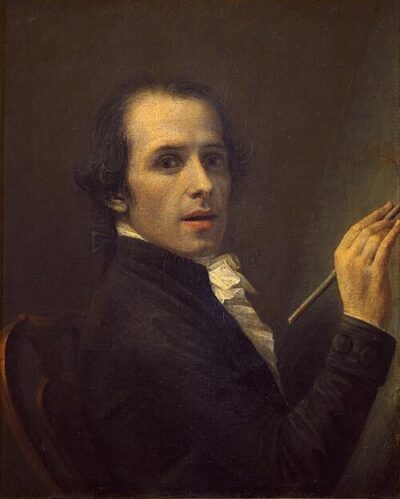
Antonio Canova
Antonio Canova was an Italian Neoclassical sculptor. Born November 1, 1757, in Possagno. Died October 13, 1822, in Venice. Known for The Three Graces, Venus Victrix and Psyche Revived by Cupid's Kiss. Educated at Accademia di Belle Arti di Venezia. Awards include Order of the Golden Spur and honorary citizen of Asolo.
Facts
35 facts · 2 confirmed by two sources · 13 cited · 20 from one source
Where this comes from
Papalocal keeps its own record. It started from these sources; what each one said is kept here as it was copied, so a change on their side never changes this page by itself. Tap one to read its version.
What Wikidata says · copied November 16, 2026 · revision 2569376567
- Described as
- Italian Neoclassical sculptor (1757–1822)
- Other names
- Antoine Canova, Marchese d'Ischia Antonio Canova, Canova, Antonio Kanova, A. Canova, a. canova, anton canova, M. Canova, canova antonio
- Born
- November 1, 1757 · 14 references
- Died
- October 13, 1822 · 14 references
- Born in
- Possagno · 5 references
- Died in
- Venice · 7 references
- Buried in
- Tempio Canoviano
- Citizen of
- Republic of Venice
- Occupation
- sculptor · 4 references; architect · 1 reference; painter · 2 references; draftsperson · 2 references
- Education
- Accademia di Belle Arti di Venezia
- Member of
- Royal Netherlands Academy of Arts and Sciences; Accademia di San Luca · 1 reference; Académie des beaux-arts; Accademia Tiberina
- Genre
- figurative art · 2 references; nude · 2 references; art of sculpture · 1 reference; allegory · 1 reference; figure · 1 reference; mythological painting · 1 reference
- Known for
- The Three Graces; Venus Victrix; Psyche Revived by Cupid's Kiss; Hercules and Lychas; George Washington; Apollo · 1 reference; Bust of Francis I · 1 reference; Bust of Francis I · 1 reference; Bust of Napoleon · 1 reference; Theseus defeating the Centaur · 1 reference
- Awards
- Order of the Golden Spur; honorary citizen of Asolo (1822) · 1 reference
- Field
- art of sculpture
- Siblings
- Giovanni Battista Sartori
- Wikipedias with a page
- 61
Wikidata item Q5547 (wikidata.org/wiki/Q5547), public domain (CC0). Copied November 16, 2026.
What Wikipedia says · copied November 16, 2026 · revision 1381464744
Antonio Canova (Italian pronunciation: [anˈtɔːnjo kaˈnɔːva]; 1 November 1757 – 13 October 1822) was an Italian Neoclassical sculptor, famous for his marble sculptures. Often regarded as the greatest of the Neoclassical artists, his sculpture was inspired by the Baroque and the classical revival, and has been characterised as having avoided the melodramatics of the former, and the cold artificiality of the latter.
- Born, in its opening lines
- November 1, 1757
- Died, in its opening lines
- October 13, 1822
From the Wikipedia article “Antonio Canova” (en.wikipedia.org/wiki/Antonio_Canova), by its contributors, under CC BY-SA 4.0 (creativecommons.org/licenses/by-sa/4.0/). Copied November 16, 2026; not changed.
Confirmed Two sources agree. Cited One source, and it names where it got it. One source One source, without a reference of its own. Sources disagree The sources disagree. We show the best-supported value and keep theirs below.
