
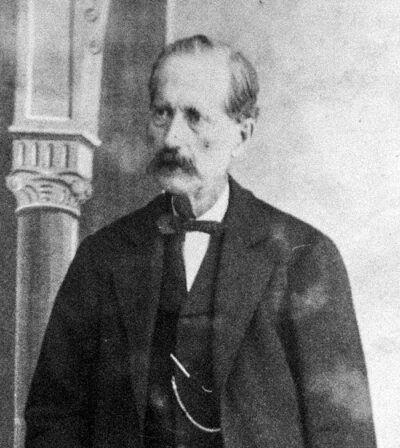
Antonio de Torres Jurado
Antonio de Torres Jurado was a guitar player and luthier. Born June 13, 1817, in La Cañada de San Urbano. Died November 19, 1892, in Almería.
Facts
11 facts · 2 confirmed by two sources · 4 cited · 5 from one source
Where this comes from
Papalocal keeps its own record. It started from these sources; what each one said is kept here as it was copied, so a change on their side never changes this page by itself. Tap one to read its version.
What Wikidata says · copied November 18, 2026 · revision 2549204339
- Described as
- guitar player and luthier (1817-1892)
- Other names
- Antonio Torres Jurado
- Born
- June 13, 1817 · 3 references
- Died
- November 19, 1892 · 3 references
- Born in
- La Cañada de San Urbano · 1 reference
- Died in
- Almería · 1 reference
- Citizen of
- Spain · 1 reference
- Occupation
- musical instrument maker · 1 reference; musician · 1 reference
- Spouse
- Juana María López
- Father
- Juan Ramón de Torres García
- Mother
- María del Carmen Jurado
- Website
- http://www.antoniodetorres.es/
- Wikipedias with a page
- 20
Wikidata item Q540093 (wikidata.org/wiki/Q540093), public domain (CC0). Copied November 18, 2026.
What Wikipedia says · copied November 18, 2026 · revision 1379793681
Antonio de Torres Jurado (13 June 1817 – 19 November 1892) was a Spanish guitarist and luthier, and "the most important Spanish guitar maker of the 19th century."
It is with his designs that the first recognizably modern classical guitars are to be seen. Most acoustic guitars in use today are derivatives of his designs.
- Born, in its opening lines
- June 13, 1817
- Died, in its opening lines
- November 19, 1892
From the Wikipedia article “Antonio de Torres Jurado” (en.wikipedia.org/wiki/Antonio_de_Torres_Jurado), by its contributors, under CC BY-SA 4.0 (creativecommons.org/licenses/by-sa/4.0/). Copied November 18, 2026; not changed.
Confirmed Two sources agree. Cited One source, and it names where it got it. One source One source, without a reference of its own. Sources disagree The sources disagree. We show the best-supported value and keep theirs below.
