
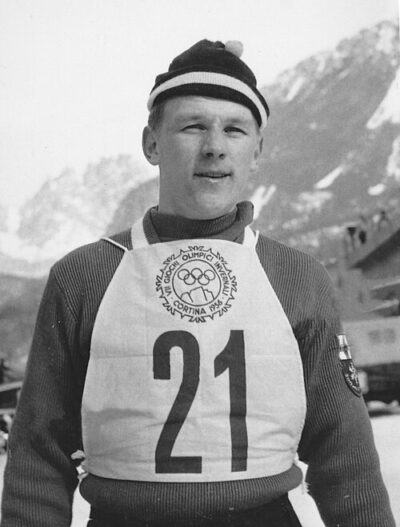
Antti Hyvärinen
Antti Hyvärinen was a Finnish ski jumper. Born June 21, 1932, in Rovaniemi. Died January 13, 2000, in Bad Nauheim.
Facts
9 facts · 2 confirmed by two sources · 4 cited · 3 from one source
Where this comes from
Papalocal keeps its own record. It started from these sources; what each one said is kept here as it was copied, so a change on their side never changes this page by itself. Tap one to read its version.
What Wikidata says · copied November 18, 2026 · revision 2569131969
- Described as
- Finnish ski jumper (1932–2000)
- Born
- June 21, 1932 · 1 reference
- Died
- January 13, 2000
- Born in
- Rovaniemi · 1 reference
- Died in
- Bad Nauheim
- Citizen of
- Finland
- Occupation
- ski jumper · 1 reference; ski jumping coach
- Sport
- ski jumping · 1 reference
- Height
- 1.76 m (5 ft 9 in) · 1 reference
- Wikipedias with a page
- 23
Wikidata item Q14706 (wikidata.org/wiki/Q14706), public domain (CC0). Copied November 18, 2026.
What Wikipedia says · copied November 18, 2026 · revision 1362052642
Antti Abram Hyvärinen (21 June 1932 – 13 January 2000) was a Finnish ski jumper and coach. He competed at the 1952 and 1956 Olympic events and finished in seventh and first place, respectively, becoming the first non-Norwegian ski jumper to win an Olympic gold medal. In 1956, he also served as the flag bearer for Finland at the opening ceremony of the Winter Olympics and won the jumping event at the Holmenkollen Ski Festival. While preparing for the 1958 World Championships, Hyvärinen fell and broke his hip, which resulted in an early retirement in November 1957. From 1960 to 1964, he worked as the head coach of the Finnish ski jumping team.
- Born, in its opening lines
- June 21, 1932
- Died, in its opening lines
- January 13, 2000
From the Wikipedia article “Antti Hyvärinen” (en.wikipedia.org/wiki/Antti_Hyvärinen), by its contributors, under CC BY-SA 4.0 (creativecommons.org/licenses/by-sa/4.0/). Copied November 18, 2026; not changed.
Confirmed Two sources agree. Cited One source, and it names where it got it. One source One source, without a reference of its own. Sources disagree The sources disagree. We show the best-supported value and keep theirs below.
