
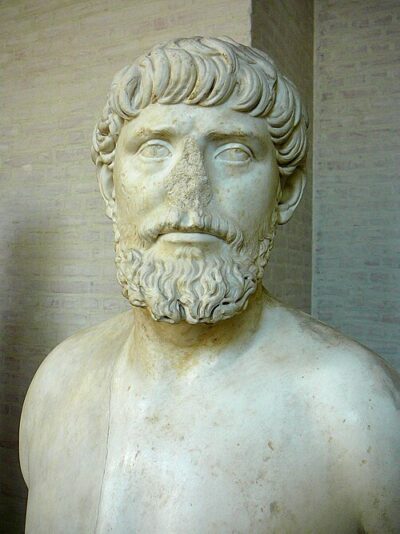
Apollodorus of Damascus
Apollodorus of Damascus was the 2nd century Syrian Roman architect and engineer. Born 1st century, in Damascus. Died 120s, in Rome. Known for Trajan's Bridge and Poliorcetica.
Facts
11 facts · 0 confirmed by two sources · 3 cited · 8 from one source
Where this comes from
Papalocal keeps its own record. It started from these sources; what each one said is kept here as it was copied, so a change on their side never changes this page by itself. Tap one to read its version.
What Wikidata says · copied November 16, 2026 · revision 2566530480
- Described as
- 2nd century Syrian Roman architect and engineer
- Other names
- Apollodoros of Damascus, Apollodorus Damascenus, Apollodorus
- Born
- 1st century
- Died
- 120s
- Born in
- Damascus
- Died in
- Rome · 1 reference
- Citizen of
- Ancient Rome
- Occupation
- architect · 1 reference; writer; engineer · 1 reference; urban planner
- Known for
- Trajan's Bridge; Poliorcetica
- Wikipedias with a page
- 47
Wikidata item Q189375 (wikidata.org/wiki/Q189375), public domain (CC0). Copied November 16, 2026.
What Wikipedia says · copied November 16, 2026 · revision 1385342267
Apollodorus of Damascus (Latin: Apollodorus Damascenus, Ancient Greek: Ἀπολλόδωρος ὁ Δαμασκηνός) was an architect and engineer from Roman Syria, who flourished during the 2nd century AD. As an architect he authored several technical treatises, and his massive architectural output gained him immense popularity during his time. He is one of the few architects whose name survives from antiquity, and is credited with introducing several Eastern innovations to the Roman Imperial style, such as making the dome a standard. He is also known as Apollodorus Mechanicus.
From the Wikipedia article “Apollodorus of Damascus” (en.wikipedia.org/wiki/Apollodorus_of_Damascus), by its contributors, under CC BY-SA 4.0 (creativecommons.org/licenses/by-sa/4.0/). Copied November 16, 2026; not changed.
Confirmed Two sources agree. Cited One source, and it names where it got it. One source One source, without a reference of its own. Sources disagree The sources disagree. We show the best-supported value and keep theirs below.
