
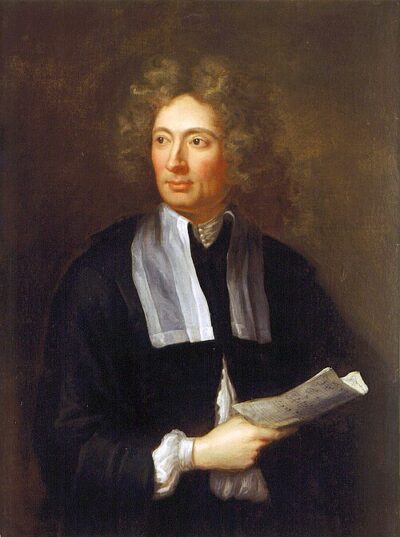
Arcangelo Corelli
Arcangelo Corelli was an Italian violinist and composer. Born February 17, 1653, in Fusignano. Died January 8, 1713, in Rome. Known for Concerti grossi, op. 6 and Twelve Violin Sonatas, Op.5.
Facts
15 facts · 2 confirmed by two sources · 5 cited · 8 from one source
Where this comes from
Papalocal keeps its own record. It started from these sources; what each one said is kept here as it was copied, so a change on their side never changes this page by itself. Tap one to read its version.
What Wikidata says · copied November 16, 2026 · revision 2564808957
- Described as
- Italian violinist and composer (1653–1713)
- Other names
- Korelli Arkanjello, Corelli
- Born
- February 17, 1653 · 12 references
- Died
- January 8, 1713 · 10 references
- Born in
- Fusignano · 2 references
- Died in
- Rome · 4 references
- Buried in
- Pantheon
- Citizen of
- Papal States
- Occupation
- composer · 1 reference; violist · 1 reference; violinist · 1 reference
- Member of
- Arcadian Academy
- Genre
- Baroque music; classical music
- Instrument
- violin
- Known for
- Concerti grossi, op. 6; Twelve Violin Sonatas, Op.5
- Wikipedias with a page
- 66
Wikidata item Q164475 (wikidata.org/wiki/Q164475), public domain (CC0). Copied November 16, 2026.
What Wikipedia says · copied November 16, 2026 · revision 1385844198
Arcangelo Corelli (, also UK: , US: ; Italian: [arˈkandʒelo koˈrɛlli]; 17 February 1653 – 8 January 1713) was an Italian composer, musician, and violinist of the middle Baroque era. His music was key in the development of the modern genres of sonata and concerto, in establishing the preeminence of the violin, and as the first coalescing of modern tonality and functional harmony.
- Born, in its opening lines
- February 17, 1653
- Died, in its opening lines
- January 8, 1713
From the Wikipedia article “Arcangelo Corelli” (en.wikipedia.org/wiki/Arcangelo_Corelli), by its contributors, under CC BY-SA 4.0 (creativecommons.org/licenses/by-sa/4.0/). Copied November 16, 2026; not changed.
Confirmed Two sources agree. Cited One source, and it names where it got it. One source One source, without a reference of its own. Sources disagree The sources disagree. We show the best-supported value and keep theirs below.
