
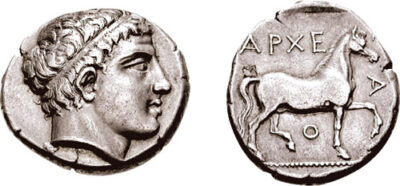
Archelaus I of Macedon
Archelaus I of Macedon was a king of Macedon. Born 5th century BC, in Macedonia. Died 399 BC, in Macedonia. Positions held include king of Macedonia. Awards include Olympic victor, tethrippon (4-horse chariot).
Facts
13 facts · 0 confirmed by two sources · 1 cited · 12 from one source
Where this comes from
Papalocal keeps its own record. It started from these sources; what each one said is kept here as it was copied, so a change on their side never changes this page by itself. Tap one to read its version.
What Wikidata says · copied November 16, 2026 · revision 2568860098
- Described as
- king of Macedon
- Other names
- Archelaus
- Born
- 5th century BC
- Died
- 399 BC
- Born in
- Macedonia · 1 reference
- Died in
- Macedonia · 1 reference
- Citizen of
- Macedonia
- Occupation
- king; athlete
- Positions held
- king of Macedonia
- Awards
- Olympic victor, tethrippon (4-horse chariot) (-408) · 1 reference
- Children
- Orestes of Macedon
- Father
- Perdiccas II of Macedon
- Mother
- Simiche · 1 reference
- Religion
- Ancient Greek religion
- Wikipedias with a page
- 35
Wikidata item Q26846 (wikidata.org/wiki/Q26846), public domain (CC0). Copied November 16, 2026.
What Wikipedia says · copied November 16, 2026 · revision 1370888997
Archelaus (; Ancient Greek: Ἀρχέλαος, romanized: Archélaos; died 399 BC) was king of the ancient Greek kingdom of Macedon from 413 to 399 BC. He was a capable and beneficent ruler, known for the sweeping changes he made in state administration, the military, and commerce. By the time that he died, Archelaus had succeeded in converting Macedon into a significantly stronger power. Thucydides credited Archelaus with doing more for his kingdom's military infrastructure than all of his predecessors together.
From the Wikipedia article “Archelaus of Macedon” (en.wikipedia.org/wiki/Archelaus_of_Macedon), by its contributors, under CC BY-SA 4.0 (creativecommons.org/licenses/by-sa/4.0/). Copied November 16, 2026; not changed.
Confirmed Two sources agree. Cited One source, and it names where it got it. One source One source, without a reference of its own. Sources disagree The sources disagree. We show the best-supported value and keep theirs below.
