
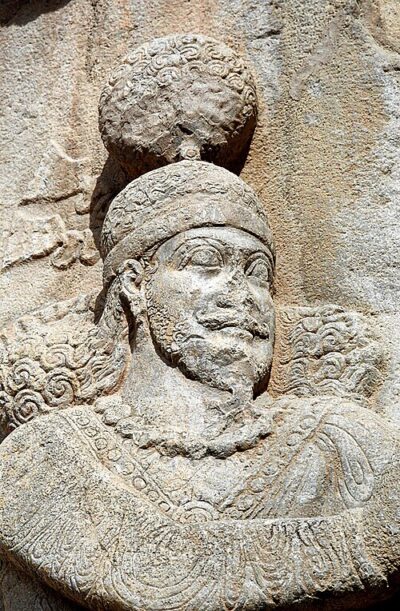
Ardashir II
Ardashir II was the 11th Sassanid emperor (r. 379–383). Born 310s. Died 383. Positions held include emperor of the Sasanian Empire (379–383).
Facts
7 facts · 0 confirmed by two sources · 0 cited · 5 from one source · 2 where the sources disagree
What’s different
- Born: we show 310s (Sources disagree). Wikipedia says 309
- Died: we show 383 (Sources disagree). Wikipedia says 379
Where this comes from
Papalocal keeps its own record. It started from these sources; what each one said is kept here as it was copied, so a change on their side never changes this page by itself. Tap one to read its version.
What Wikidata says · copied November 16, 2026 · revision 2569176343
- Described as
- the 11th Sassanid emperor (r. 379–383)
- Born
- 310s
- Died
- 383
- Citizen of
- Sasanian Empire
- Occupation
- sovereign
- Positions held
- emperor of the Sasanian Empire (379–383)
- Father
- Hormizd II
- Religion
- Zoroastrianism
- Wikipedias with a page
- 42
Wikidata item Q310311 (wikidata.org/wiki/Q310311), public domain (CC0). Copied November 16, 2026.
What Wikipedia says · copied November 16, 2026 · revision 1376567118
Ardashir II (Middle Persian: 𐭠𐭥𐭲𐭧𐭱𐭲𐭥, romanized: Ardašīr), was the Sasanian King of Kings (shahanshah) of Iran from 379 to 383. He was the brother of his predecessor, Shapur II (r. 309–379), under whom he had served as vassal king of Adiabene, where he fought alongside his brother against the Romans. Ardashir II was appointed as his brother's successor to rule interimly till the latter's son Shapur III reached adulthood. Ardashir II's short reign was largely uneventful, with the Sasanians unsuccessfully trying to maintain rule over Armenia.
Ardashir II was seemingly a strong-willed character, and is known in some sources by the epithet of nikukar ("the beneficent").
- Born, in its opening lines
- 309
- Died, in its opening lines
- 379
From the Wikipedia article “Ardashir II” (en.wikipedia.org/wiki/Ardashir_II), by its contributors, under CC BY-SA 4.0 (creativecommons.org/licenses/by-sa/4.0/). Copied November 16, 2026; not changed.
Confirmed Two sources agree. Cited One source, and it names where it got it. One source One source, without a reference of its own. Sources disagree The sources disagree. We show the best-supported value and keep theirs below.
