
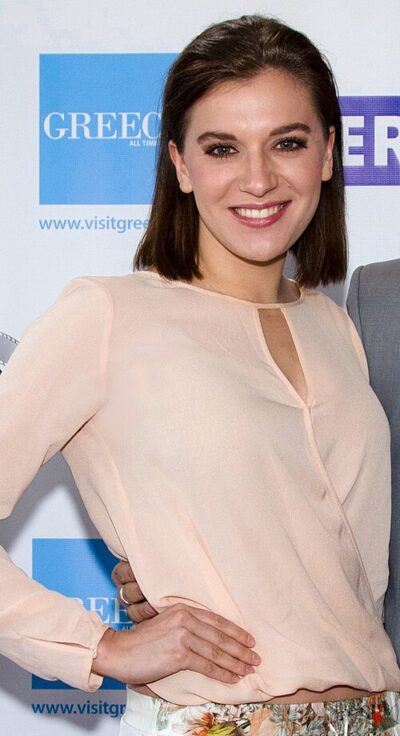
Ariana Savalas is an American actress and musician. Born January 9, 1987, in Los Angeles. Educated at Royal Academy of Dramatic Art and Alpharetta High School.
Facts
13 facts · 1 confirmed by two sources · 0 cited · 12 from one source
Where this comes from
Papalocal keeps its own record. It started from these sources; what each one said is kept here as it was copied, so a change on their side never changes this page by itself. Tap one to read its version.
What Wikidata says · copied November 20, 2026 · revision 2546592550
- Described as
- American actress and musician
- Born
- January 9, 1987
- Born in
- Los Angeles
- Citizen of
- United States
- Occupation
- actor; jazz musician; television actor; film actor · 1 reference; singer-songwriter · 1 reference; film director · 1 reference
- Education
- Royal Academy of Dramatic Art; Alpharetta High School · 1 reference
- Father
- Telly Savalas
- Website
- http://www.arianasavalas.com/
- Wikipedias with a page
- 9
Wikidata item Q4790221 (wikidata.org/wiki/Q4790221), public domain (CC0). Copied November 20, 2026.
What Wikipedia says · copied November 20, 2026 · revision 1369865450
Ariana Savalas ( sə-VA(H)L-əs; born January 9, 1987) is an American singer and songwriter. She has worked as the emcee and singer for burlesque performer Dita Von Teese and the Crazy Horse cabaret in Paris.
She was one of the original members of Postmodern Jukebox alongside Haley Reinhart, Casey Abrams, Robyn Adele Anderson, and Morgan James, and the group's first female emcee. Savalas tours with the band and has appeared in a number of the group's YouTube videos, two of her videos in the top five most popular videos in the group's history.
- Born, in its opening lines
- January 9, 1987
From the Wikipedia article “Ariana Savalas” (en.wikipedia.org/wiki/Ariana_Savalas), by its contributors, under CC BY-SA 4.0 (creativecommons.org/licenses/by-sa/4.0/). Copied November 20, 2026; not changed.
Confirmed Two sources agree. Cited One source, and it names where it got it. One source One source, without a reference of its own. Sources disagree The sources disagree. We show the best-supported value and keep theirs below.
