
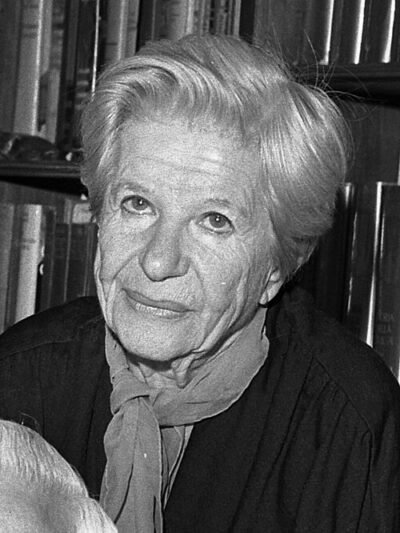
Ariel Durant
Ariel Durant was a Russian-Jewish American writer. Born May 10, 1898, in Khmelnytskyi. Died October 25, 1981, in Los Angeles. Educated at Art Students League of New York and Ferrer Colony and Ferrer Modern School. Awards include Pulitzer Prize for General Nonfiction and Presidential Medal of Freedom.
Facts
14 facts · 2 confirmed by two sources · 3 cited · 9 from one source
Where this comes from
Papalocal keeps its own record. It started from these sources; what each one said is kept here as it was copied, so a change on their side never changes this page by itself. Tap one to read its version.
What Wikidata says · copied November 16, 2026 · revision 2528363441
- Described as
- Russian-Jewish American writer
- Born
- May 10, 1898 · 3 references
- Died
- October 25, 1981 · 3 references
- Born in
- Khmelnytskyi
- Died in
- Los Angeles
- Buried in
- Westwood Village Memorial Park Cemetery
- Citizen of
- United States; Russian Empire
- Occupation
- historian · 1 reference; writer
- Education
- Art Students League of New York; Ferrer Colony and Ferrer Modern School
- Awards
- Pulitzer Prize for General Nonfiction (1968) · 1 reference; Presidential Medal of Freedom (1977) · 1 reference
- Spouse
- Will Durant · 1 reference
- Wikipedias with a page
- 21
Wikidata item Q469474 (wikidata.org/wiki/Q469474), public domain (CC0). Copied November 16, 2026.
What Wikipedia says · copied November 16, 2026 · revision 1374364221
Ariel Durant (; born Chaya Kaufman; May 10, 1898 – October 25, 1981) was a Ukrainian-born American researcher and writer. She was the coauthor of The Story of Civilization with her husband, Will Durant. They were awarded the Pulitzer Prize for General Nonfiction.
- Born, in its opening lines
- May 10, 1898
- Died, in its opening lines
- October 25, 1981
From the Wikipedia article “Ariel Durant” (en.wikipedia.org/wiki/Ariel_Durant), by its contributors, under CC BY-SA 4.0 (creativecommons.org/licenses/by-sa/4.0/). Copied November 16, 2026; not changed.
Confirmed Two sources agree. Cited One source, and it names where it got it. One source One source, without a reference of its own. Sources disagree The sources disagree. We show the best-supported value and keep theirs below.
