
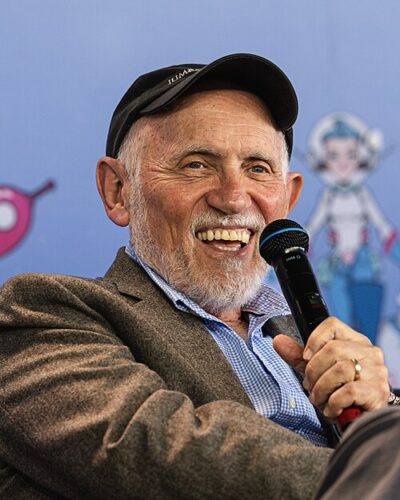
Armin Shimerman
Armin Shimerman is an American actor. Born November 5, 1949, in Lakewood. Known for Ratchet & Clank. Educated at University of California, Los Angeles and Santa Monica High School.
Facts
14 facts · 1 confirmed by two sources · 3 cited · 10 from one source
Where this comes from
Papalocal keeps its own record. It started from these sources; what each one said is kept here as it was copied, so a change on their side never changes this page by itself. Tap one to read its version.
What Wikidata says · copied November 16, 2026 · revision 2569970575
- Described as
- American actor (born 1949)
- Born
- November 5, 1949 · 3 references
- Born in
- Lakewood
- Citizen of
- United States
- Occupation
- stage actor; film actor; television actor; writer; voice actor; actor · 1 reference
- Education
- University of California, Los Angeles; Santa Monica High School
- Known for
- Ratchet & Clank
- Spouse
- Kitty Swink (1981–) · 1 reference
- Website
- https://www.arminshimerman.com/ · 1 reference
- Wikipedias with a page
- 24
Wikidata item Q353101 (wikidata.org/wiki/Q353101), public domain (CC0). Copied November 16, 2026.
What Wikipedia says · copied November 16, 2026 · revision 1377139301
Armin Shimerman (born November 5, 1949) is an American actor who played Quark the Ferengi in the Star Trek franchise, appearing as the character in all seven seasons of Star Trek: Deep Space Nine (1993–1999). He also had a recurring role as Principal Snyder in the first three seasons of Buffy the Vampire Slayer (1997–1999), and voiced General Skarr and other characters in the animated series Evil Con Carne (2001–2004) and The Grim Adventures of Billy & Mandy (2001–2007), Doctor Nefarious in the Ratchet & Clank video game series, and Andrew Ryan in the BioShock video game series.
- Born, in its opening lines
- November 5, 1949
From the Wikipedia article “Armin Shimerman” (en.wikipedia.org/wiki/Armin_Shimerman), by its contributors, under CC BY-SA 4.0 (creativecommons.org/licenses/by-sa/4.0/). Copied November 16, 2026; not changed.
Confirmed Two sources agree. Cited One source, and it names where it got it. One source One source, without a reference of its own. Sources disagree The sources disagree. We show the best-supported value and keep theirs below.
