
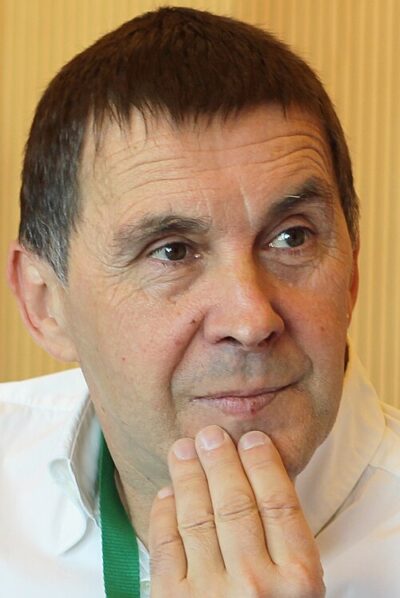
Arnaldo Otegi
Arnaldo Otegi is a Basque pro-independence politician. Born July 6, 1958, in Elgoibar. Positions held include deputy of the Basque Parliament (1995–2005). Educated at Zorroagako filosofia fakultatea and National University of Distance Education.
Facts
13 facts · 1 confirmed by two sources · 2 cited · 10 from one source
Where this comes from
Papalocal keeps its own record. It started from these sources; what each one said is kept here as it was copied, so a change on their side never changes this page by itself. Tap one to read its version.
What Wikidata says · copied November 17, 2026 · revision 2571121382
- Described as
- Basque pro-independence politician
- Other names
- Arnaldo Otegi Mondragon
- Born
- July 6, 1958
- Born in
- Elgoibar
- Citizen of
- Basque Country · 1 reference
- Occupation
- politician · 1 reference
- Positions held
- deputy of the Basque Parliament (1995–2005) · 1 reference
- Political party
- Euskal Herria Bildu; Batasuna (2001–2003); Euskal Herritarrok; Herri Batasuna (–2001)
- Education
- Zorroagako filosofia fakultatea; National University of Distance Education
- Member of
- Euskadi Ta Askatasuna; ETA political-military
- Wikipedias with a page
- 25
Wikidata item Q547356 (wikidata.org/wiki/Q547356), public domain (CC0). Copied November 17, 2026.
What Wikipedia says · copied November 17, 2026 · revision 1384315263
Arnaldo Otegi Mondragón (born 6 July 1958 in Elgoibar) is a politician from the Basque Country who has been the General Secretary of Basque nationalist party EH Bildu since 2017. He was a deputy of the Basque Parliament between 1995 and 2005 for both Herri Batasuna and Euskal Herritarrok. He was a convicted member of the ETA, an armed separatist organization, in his early years. He was one of the key negotiators during the unsuccessful peace talks in Loiola and Geneva, in 2006, as well as later peace talks that culminated in ETA's permanent ceasefire in 2011 and its full disarmament in 2017.
In the 1990s, Otegi started his political career and quickly gained prominence within the Basque separatist movement, becoming the leader of Herri Batasuna. During the period, he participated in the attempts at finding a political and negotiated solution for the Basque conflict that laid out the grounds for the Lizarra-Garazi Agreements and ETA's truce in 1998. He headed the party Batasuna, declared illegal in 2003 due to its alleged relationship with ETA, but continued talks with Jesus Egiguren from the Spanish PSOE party in order to reach a compromise leading to lasting peace.
In June 2007, Otegi was convicted of "praising terrorism", imprisoned, and then released from prison in August the following year. In October 2009 he was arrested for attempting to put Batasuna back together, and was given a ten-year sentence. In May 2012, his sentence was reduced to 6½ years by the Supreme Court of Spain as they considered him a member, but not a leader of ETA. Otegi was released from prison on 1 March 2016, with the European Court of Humans Rights ruling against Spain for the Spanish National Court's breach of the defendant's right to have an impartial trial, for which he had spent 6 years in prison. Otegi had already received a favorable ruling by that same European court 5 years earlier, when it was ruled that Spanish courts violated his right of freedom of speech in 2003, when he was given a one year prison sentence for slander against the Spanish king for saying said that the king "protects torturers".
Otegi was chosen as candidate for the post of Lehendakari by EH Bildu for the Basque parliamentary election of 2016 but the electoral committee invalidated his candidacy due to his penal disqualification.
In the April 2022 espionage scandal, it was known that agents of Spanish intelligence had been using the Pegasus software for spying on Arnaldo Otegi, as well as other Basque and Catalonian pro-independence politicians and activists.
- Born, in its opening lines
- July 6, 1958
From the Wikipedia article “Arnaldo Otegi” (en.wikipedia.org/wiki/Arnaldo_Otegi), by its contributors, under CC BY-SA 4.0 (creativecommons.org/licenses/by-sa/4.0/). Copied November 17, 2026; not changed.
Confirmed Two sources agree. Cited One source, and it names where it got it. One source One source, without a reference of its own. Sources disagree The sources disagree. We show the best-supported value and keep theirs below.
