
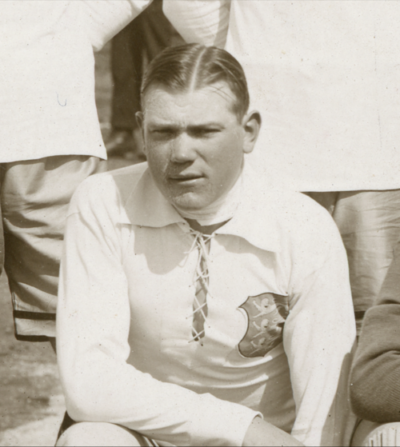
Arnold Pihlak
Arnold Pihlak was an Estonian athlete active in the early to mid-20th century. He competed in both association football and bandy. Born in 1902, Pihlak achieved a notable distinction in his football career when he became the first Estonian to play professionally. This occurred in 1928 after he joined the Austrian club Austria Vienna. Pihlak lived until 1985.
Facts
17 facts · 2 confirmed by two sources · 3 cited · 12 from one source
Where this comes from
Papalocal keeps its own record. It started from these sources; what each one said is kept here as it was copied, so a change on their side never changes this page by itself. Tap one to read its version.
What Wikidata says · copied November 13, 2026 · revision 2555425347
- Described as
- Estonian footballer and bandy player (1902–1985)
- Born
- July 17, 1902 · 1 reference
- Died
- November 1, 1985 · 1 reference
- Born in
- Tallinn · 1 reference
- Died in
- Bradford · 1 reference
- Citizen of
- Estonia; United Kingdom
- Occupation
- association football player; bandy player
- Teams
- JK Tallinna Kalev (1920–1925); FK Austria Wien (1928–1929); Estonia men's national football team (1920–1931); SK Tallinna Sport (1924); Tallinna JK (1925–1930); JS Estonia Tallinn (1931–1934)
- Sport
- association football; bandy
- Height
- 1.82 m (6 ft 0 in) · 1 reference
- Wikipedias with a page
- 12
Wikidata item Q695967 (wikidata.org/wiki/Q695967), public domain (CC0). Copied November 13, 2026.
What Wikipedia says · copied November 13, 2026 · revision 1381791621
Arnold Pihlak (17 July 1902 – 1 November 1985) was an Estonian footballer. After joining Austria Vienna in 1928, he became the first-ever Estonian professional footballer.
- Born, in its opening lines
- July 17, 1902
- Died, in its opening lines
- November 1, 1985
From the Wikipedia article “Arnold Pihlak” (en.wikipedia.org/wiki/Arnold_Pihlak), by its contributors, under CC BY-SA 4.0 (creativecommons.org/licenses/by-sa/4.0/). Copied November 13, 2026; not changed.
Confirmed Two sources agree. Cited One source, and it names where it got it. One source One source, without a reference of its own. Sources disagree The sources disagree. We show the best-supported value and keep theirs below.
