
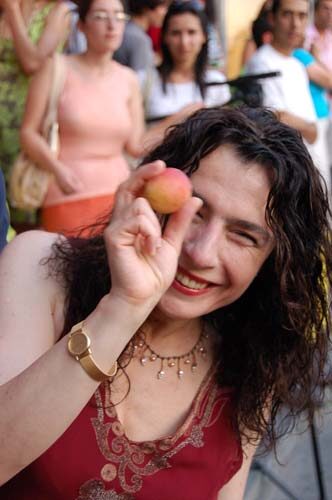
Arsinée Khanjian
Arsinée Khanjian is an Armenian-Canadian actress. Born September 6, 1958, in Beirut. Educated at University of Toronto and Concordia University. Awards include Academy of Canadian Cinema and Television Award for Best Performance by an Actress in a Leading Role.
Facts
13 facts · 1 confirmed by two sources · 1 cited · 11 from one source
Where this comes from
Papalocal keeps its own record. It started from these sources; what each one said is kept here as it was copied, so a change on their side never changes this page by itself. Tap one to read its version.
What Wikidata says · copied November 16, 2026 · revision 2569414664
- Described as
- Armenian-Canadian actress
- Other names
- Arsinee Khanjian
- Born
- September 6, 1958 · 1 reference
- Born in
- Beirut
- Citizen of
- Lebanon; Canada
- Occupation
- film director; stage actor; film actor; actor · 1 reference
- Education
- University of Toronto; Concordia University · 1 reference
- Awards
- Academy of Canadian Cinema and Television Award for Best Performance by an Actress in a Leading Role
- Spouse
- Atom Egoyan
- Children
- Arshile
- Wikipedias with a page
- 20
Wikidata item Q465998 (wikidata.org/wiki/Q465998), public domain (CC0). Copied November 16, 2026.
What Wikipedia says · copied November 16, 2026 · revision 1379434367
Arsinée Khanjian (Western Armenian: Արսինէ Խանճեան, Eastern Armenian: Արսինե Խանջյան; Arabic: آرسينيه خانجيان; born 6 September 1958) is a Lebanese-Canadian actress and activist. She is widely known for her collaborations with her husband, filmmaker Atom Egoyan. She won the 2003 Genie Award for Best Performance by an Actress in a Leading Role for her role in Ararat.
- Born, in its opening lines
- September 6, 1958
From the Wikipedia article “Arsinée Khanjian” (en.wikipedia.org/wiki/Arsinée_Khanjian), by its contributors, under CC BY-SA 4.0 (creativecommons.org/licenses/by-sa/4.0/). Copied November 16, 2026; not changed.
Confirmed Two sources agree. Cited One source, and it names where it got it. One source One source, without a reference of its own. Sources disagree The sources disagree. We show the best-supported value and keep theirs below.
