
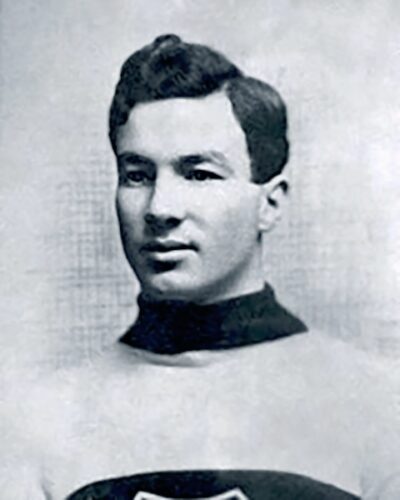
Art Ross
Art Ross was a Canadian hockey player. Born January 13, 1886, in Naughton. Died August 5, 1964, in Medford. Teams include Montreal Wanderers. Educated at Westmount High School. Awards include Stanley Cup, Canada's Sports Hall of Fame and Hockey Hall of Fame.
Facts
15 facts · 1 confirmed by two sources · 4 cited · 9 from one source · 1 where the sources disagree
What’s different
- Born: we show January 13, 1886 (Sources disagree). Wikipedia says January 13, 1885
Where this comes from
Papalocal keeps its own record. It started from these sources; what each one said is kept here as it was copied, so a change on their side never changes this page by itself. Tap one to read its version.
What Wikidata says · copied November 18, 2026 · revision 2565910947
- Described as
- Canadian hockey player (1886-1964)
- Other names
- Arthur Howe Ross
- Born
- January 13, 1886
- Died
- August 5, 1964
- Born in
- Naughton
- Died in
- Medford
- Citizen of
- Canada
- Occupation
- ice hockey player · 1 reference; ice hockey coach
- Education
- Westmount High School
- Teams
- Montreal Wanderers
- Sport
- ice hockey · 1 reference
- Awards
- Stanley Cup; Canada's Sports Hall of Fame; Hockey Hall of Fame (1949) · 1 reference; Lester Patrick Trophy (1984) · 1 reference
- Height
- 1.80 m (5 ft 11 in)
- Wikipedias with a page
- 18
Wikidata item Q539010 (wikidata.org/wiki/Q539010), public domain (CC0). Copied November 18, 2026.
What Wikipedia says · copied November 18, 2026 · revision 1380803836
Arthur Howey Ross (January 13, 1885 – August 5, 1964) was a Canadian professional ice hockey player and executive from 1905 until 1954. Regarded as one of the best defenders of his era by his peers, he was one of the first to skate with the puck up the ice rather than pass it to a forward. He was on Stanley Cup championship teams twice in a playing career that lasted thirteen seasons; in January 1907 with the Kenora Thistles and 1908 with the Montreal Wanderers. Like other players of the time, Ross played for several different teams and leagues, and is noted for his time with the Wanderers while they were members of the National Hockey Association (NHA) and its successor, the National Hockey League (NHL). In 1911, he led one of the first organized player strikes over increased pay. When the Wanderers' home arena burned down in January 1918, the team ceased operations and Ross retired as a player.
After several years as an on-ice official, he was named head coach of the Hamilton Tigers for one season. When the Boston Bruins were formed in 1924, Ross was hired as the first coach and general manager of the team. He later coached the team on three occasions until 1945, and stayed as general manager until his retirement in 1954. Ross helped the Bruins finish first place in the league ten times and win the Stanley Cup three times; Ross personally coached the team to two of those victories. After being hired by the Bruins, Ross, along with his wife and two sons, moved to a suburb of Boston, and he became an American citizen in 1938. He died near Boston in 1964.
Outside of his association with the Bruins, Ross also helped to improve the game. He created a style of hockey puck still used today, and advocated an improved style of goal nets, a change that lasted forty years. In 1947, Ross donated the Art Ross Trophy, awarded to the leading scorer of the NHL regular season. Ross was inducted into the Hockey Hall of Fame in 1949.
- Born, in its opening lines
- January 13, 1885
- Died, in its opening lines
- August 5, 1964
From the Wikipedia article “Art Ross” (en.wikipedia.org/wiki/Art_Ross), by its contributors, under CC BY-SA 4.0 (creativecommons.org/licenses/by-sa/4.0/). Copied November 18, 2026; not changed.
Confirmed Two sources agree. Cited One source, and it names where it got it. One source One source, without a reference of its own. Sources disagree The sources disagree. We show the best-supported value and keep theirs below.
