
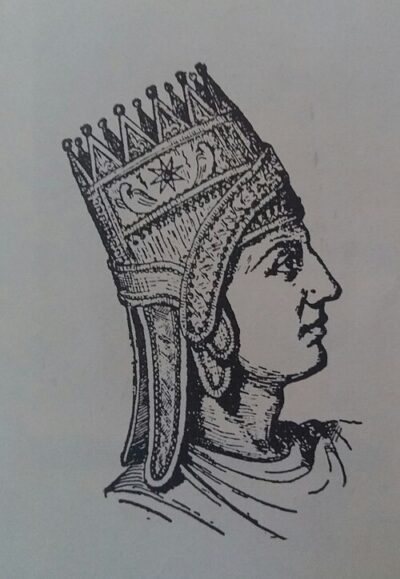
Artavasdes II of Armenia
Artavasdes II of Armenia was a king of Armenia. Born 1st century BC, in Kingdom of Armenia. Died 31 BC, in Alexandria. Positions held include king of Armenia (-55–-34).
Facts
17 facts · 0 confirmed by two sources · 3 cited · 13 from one source · 1 where the sources disagree
What’s different
- Died: we show 31 BC (Sources disagree). Wikidata also lists 34 BC
Where this comes from
Papalocal keeps its own record. It started from these sources; what each one said is kept here as it was copied, so a change on their side never changes this page by itself. Tap one to read its version.
What Wikidata says · copied November 16, 2026 · revision 2566533224
- Described as
- king of Armenia
- Born
- 1st century BC
- Died
- 31 BC · 1 reference; 34 BC · 1 reference
- Born in
- Kingdom of Armenia
- Died in
- Alexandria · 1 reference
- Cause of death
- decapitation
- Occupation
- sovereign
- Positions held
- king of Armenia (-55–-34) · 1 reference
- Children
- Tigranes III; Artaxias II; Artavazde III
- Father
- Tigranes the Great · 1 reference
- Mother
- Cleopatra of Pontus
- Siblings
- Tigranes the Younger; Ariazate; wife of Mithridates I of Media Atropatene; sister of Artavasdes
- Religion
- Armenian mythology
- Wikipedias with a page
- 35
Wikidata item Q363394 (wikidata.org/wiki/Q363394), public domain (CC0). Copied November 16, 2026.
What Wikipedia says · copied November 16, 2026 · revision 1358479541
Artavasdes II (Ancient Greek: Ἀρταουάσδης Artaouásdēs), also known as Artavazd II, was king of Armenia from 55 BC to 34 BC. A member of the Artaxiad dynasty, he was the son and successor of Tigranes the Great (r. 95–55 BC), who ascended the throne of a still powerful and independent state. Like his father, Artavasdes continued using the title of King of Kings, as seen from his coins.
From the Wikipedia article “Artavasdes II of Armenia” (en.wikipedia.org/wiki/Artavasdes_II_of_Armenia), by its contributors, under CC BY-SA 4.0 (creativecommons.org/licenses/by-sa/4.0/). Copied November 16, 2026; not changed.
Confirmed Two sources agree. Cited One source, and it names where it got it. One source One source, without a reference of its own. Sources disagree The sources disagree. We show the best-supported value and keep theirs below.
