
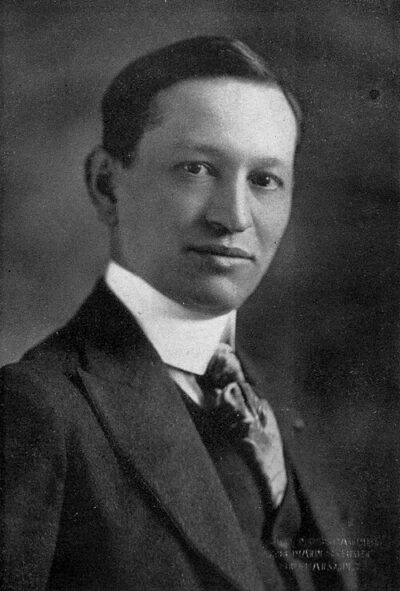
Arthur Caswell Parker
Arthur Caswell Parker was an American archaeologist. Born April 5, 1881, in Cattaraugus Reservation. Died January 1, 1955. Awards include Cornplanter Medal.
Facts
10 facts · 2 confirmed by two sources · 0 cited · 8 from one source
Where this comes from
Papalocal keeps its own record. It started from these sources; what each one said is kept here as it was copied, so a change on their side never changes this page by itself. Tap one to read its version.
What Wikidata says · copied November 19, 2026 · revision 2513215523
- Described as
- American archaeologist (1881–1955)
- Other names
- Arthur C. Parker
- Born
- April 5, 1881 · 2 references
- Died
- January 1, 1955 · 2 references
- Born in
- Cattaraugus Reservation
- Name at birth
- Arthur Caswell Parker
- Citizen of
- United States
- Occupation
- anthropologist; historian; archaeologist
- Awards
- Cornplanter Medal (1916)
- Children
- Bertha Parker Pallan
- Wikipedias with a page
- 11
Wikidata item Q1101944 (wikidata.org/wiki/Q1101944), public domain (CC0). Copied November 19, 2026.
What Wikipedia says · copied November 19, 2026 · revision 1374208359
Arthur Caswell Parker (Seneca: Ga:wasowa:nëh, April 5, 1881 – January 1, 1955) was a Native American archaeologist, historian, folklorist, museologist and noted authority on Native American culture. Of Seneca, Scottish, and English ancestry, he was director of the Rochester Museum of Arts and Sciences from 1924 to 1945, when he developed its holdings and research into numerous disciplines for the Genesee Region. He was an honorary trustee of the New York State Historical Association. In 1935, he was elected the first president of the Society for American Archaeology.
- Born, in its opening lines
- April 5, 1881
- Died, in its opening lines
- January 1, 1955
From the Wikipedia article “Arthur C. Parker” (en.wikipedia.org/wiki/Arthur_C._Parker), by its contributors, under CC BY-SA 4.0 (creativecommons.org/licenses/by-sa/4.0/). Copied November 19, 2026; not changed.
Confirmed Two sources agree. Cited One source, and it names where it got it. One source One source, without a reference of its own. Sources disagree The sources disagree. We show the best-supported value and keep theirs below.
