
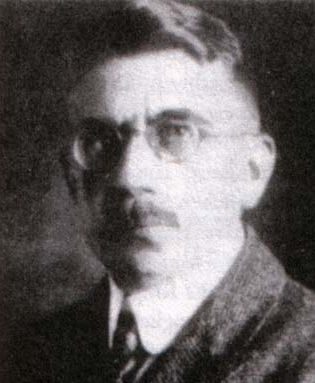
Arthur Scherbius
Arthur Scherbius was a German cryptographer. Born October 20, 1878, in Frankfurt. Died May 13, 1929, in Berlin. Educated at Technical University of Munich and Leibniz University Hannover.
Facts
14 facts · 1 confirmed by two sources · 3 cited · 9 from one source · 1 where the sources disagree
What’s different
- Born: we show October 20, 1878 (Sources disagree). Wikipedia says October 30, 1878
Where this comes from
Papalocal keeps its own record. It started from these sources; what each one said is kept here as it was copied, so a change on their side never changes this page by itself. Tap one to read its version.
What Wikidata says · copied November 17, 2026 · revision 2568904494
- Described as
- German cryptographer (1878–1929)
- Born
- October 20, 1878
- Died
- May 13, 1929
- Born in
- Frankfurt
- Died in
- Berlin
- Cause of death
- traffic collision
- Citizen of
- Germany
- Occupation
- mathematician; engineer · 2 references; inventor · 1 reference
- Education
- Technical University of Munich; Leibniz University Hannover · 1 reference
- Field
- cryptography; electrical engineering
- Spouse
- Elisabeth Pungs · 1 reference
- Wikipedias with a page
- 26
Wikidata item Q58816 (wikidata.org/wiki/Q58816), public domain (CC0). Copied November 17, 2026.
What Wikipedia says · copied November 17, 2026 · revision 1384675708
Jacob Ludolf Arthur Scherbius (30 October 1878 – 13 May 1929) was a German electrical engineer who is best known for inventing the mechanical rotor cipher Enigma machine. He patented the invention and later sold the machine under the brand name Enigma. Starting in 1923 the Enigma was used by the Reichswehr who began to encrypt their communications in 1930 and subsequently from March 1935, the Wehrmacht onwards to encrypt its secret communications
- Born, in its opening lines
- October 30, 1878
- Died, in its opening lines
- May 13, 1929
From the Wikipedia article “Arthur Scherbius” (en.wikipedia.org/wiki/Arthur_Scherbius), by its contributors, under CC BY-SA 4.0 (creativecommons.org/licenses/by-sa/4.0/). Copied November 17, 2026; not changed.
Confirmed Two sources agree. Cited One source, and it names where it got it. One source One source, without a reference of its own. Sources disagree The sources disagree. We show the best-supported value and keep theirs below.
