
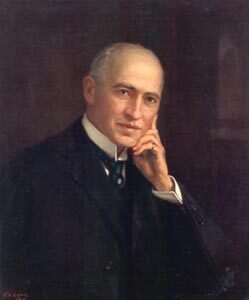
Arthur Sifton
Arthur Sifton was a Premier of Alberta. Born October 26, 1858, in Middlesex Centre. Died January 21, 1921, in Ottawa. Positions held include Premier of Alberta (1910–1917), Member of the Privy Council of the United Kingdom (1920–1921) and member of Alberta Legislative Assembly (1910–1917). Educated at Victoria University and Wesley College.
Facts
22 facts · 2 confirmed by two sources · 4 cited · 16 from one source
Where this comes from
Papalocal keeps its own record. It started from these sources; what each one said is kept here as it was copied, so a change on their side never changes this page by itself. Tap one to read its version.
What Wikidata says · copied November 20, 2026 · revision 2562795421
- Described as
- Premier of Alberta (1858-1921)
- Other names
- Arthur Lewis Watkins Sifton, Arthur L. Sifton, Arthur Lewis Sifton
- Born
- October 26, 1858 · 3 references
- Died
- January 21, 1921 · 3 references
- Born in
- Middlesex Centre
- Died in
- Ottawa
- Buried in
- Beechwood Cemetery
- Citizen of
- Canada
- Occupation
- politician; judge; lawyer · 1 reference
- Positions held
- Premier of Alberta (1910–1917); Member of the Privy Council of the United Kingdom (1920–1921) · 1 reference; member of Alberta Legislative Assembly (1910–1917) · 1 reference; chief justice of Alberta (1907–1910); Secretary of State for Canada (1919–1921); Minister of Public Works (1919); member of the House of Commons of Canada (1917–1921) · 1 reference
- Political party
- Alberta Liberal Party; Unionist Party
- Education
- Victoria University; Wesley College
- Father
- John Wright Sifton
- Siblings
- Clifford Sifton
- Wikipedias with a page
- 9
Wikidata item Q363738 (wikidata.org/wiki/Q363738), public domain (CC0). Copied November 20, 2026.
What Wikipedia says · copied November 20, 2026 · revision 1383187964
Arthur Lewis Watkins Sifton (October 26, 1858 – January 21, 1921) was a Canadian lawyer, judge and politician who served as the second premier of Alberta from 1910 until 1917. He became a minister in the federal cabinet of Canada thereafter. Born in Canada West (now Ontario), he grew up there and in Winnipeg, where he became a lawyer. He subsequently practised law with his brother Clifford Sifton in Brandon, where he was also active in municipal politics. He moved west to Prince Albert in 1885 and to Calgary in 1889. There, he was elected to the 4th and 5th North-West Legislative Assemblies; he served as a minister in the government of premier Frederick Haultain. In 1903, the federal government, at the instigation of his brother (who was then one of its ministers), made Sifton the Chief Justice of the Northwest Territories. After Alberta was created out of a portion of the Northwest Territories in 1905, Sifton became the first Chief Justice of Alberta in 1907 and served until 1910.
In 1910, the Liberal government of Alberta premier Alexander Cameron Rutherford was embroiled in the Alberta and Great Waterways Railway scandal. The Lieutenant Governor of Alberta, George Bulyea, was a Liberal and determined that for the sake of the Alberta Liberal Party, Rutherford had to be pushed aside in favour of a new premier. When other prominent Liberals declined it, the position was offered to Sifton, who accepted it. As premier, Sifton smoothed over the divisions in the party that had caused and been exacerbated by the railway scandal. He made attempts to break with the Rutherford railway policy; when these were rebuffed by the courts, he adopted a course similar to Rutherford's. He unsuccessfully pursued the transfer of rights over Alberta's natural resources from the federal government, which had retained them by the terms of Alberta's provincehood.
While Sifton was premier, the United Farmers of Alberta rose as a political force. Sifton tried to accommodate many of their demands: his government constructed agricultural colleges, incorporated a farmer-run grain elevator cooperative, and implemented a municipal system of hail insurance. Outside of agriculture, the UFA was instrumental in the Sifton government's implementation of some direct democracy measures (which resulted in prohibition) and the extension of the vote to women.
During the conscription crisis of 1917, Sifton supported the Conservative prime minister, Sir Robert Borden, in his attempt to impose conscription to help win the First World War. He backed the creation of a federal Union government composed of Conservatives and pro-conscription Liberals. In 1917, he left provincial politics and became a cabinet minister in the Union government. Over the next three and a half years, he served briefly in four different ministries and was a delegate to the Paris Peace Conference of 1919. He died in Ottawa in January 1921 after a brief illness.
- Born, in its opening lines
- October 26, 1858
- Died, in its opening lines
- January 21, 1921
From the Wikipedia article “Arthur Sifton” (en.wikipedia.org/wiki/Arthur_Sifton), by its contributors, under CC BY-SA 4.0 (creativecommons.org/licenses/by-sa/4.0/). Copied November 20, 2026; not changed.
Confirmed Two sources agree. Cited One source, and it names where it got it. One source One source, without a reference of its own. Sources disagree The sources disagree. We show the best-supported value and keep theirs below.
