
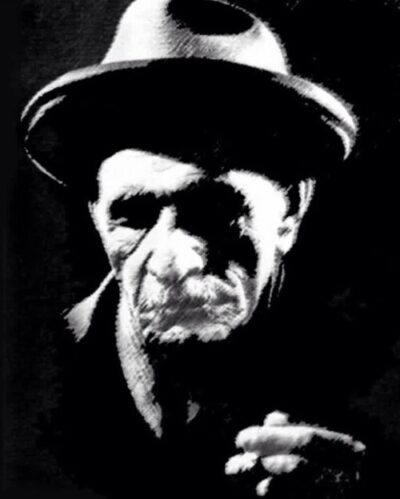
Âşık Veysel
Âşık Veysel was a Turkish poet. Born October 25, 1894, in Şarkışla. Died March 21, 1973, in Şarkışla.
Facts
17 facts · 2 confirmed by two sources · 2 cited · 13 from one source
Where this comes from
Papalocal keeps its own record. It started from these sources; what each one said is kept here as it was copied, so a change on their side never changes this page by itself. Tap one to read its version.
What Wikidata says · copied November 18, 2026 · revision 2563796590
- Described as
- Turkish poet (1894–1973)
- Other names
- Aşık Veysel
- Born
- October 25, 1894 · 3 references
- Died
- March 21, 1973 · 3 references
- Born in
- Şarkışla
- Died in
- Şarkışla
- Buried in
- Sivrialan
- Cause of death
- lung cancer
- Citizen of
- Ottoman Empire; Turkey · 1 reference
- Occupation
- singer · 1 reference; poet; composer; songwriter; ashik; writer · 1 reference
- Genre
- Turkish folk music · 1 reference
- Instrument
- voice
- Religion
- Islam
- Wikipedias with a page
- 24
Wikidata item Q252734 (wikidata.org/wiki/Q252734), public domain (CC0). Copied November 18, 2026.
What Wikipedia says · copied November 18, 2026 · revision 1370846439
Âşık Veysel (Turkish: [aːˈʃɯk vejˈsæl]; born Veysel Şatıroğlu (Turkish: [ʃaːˈtɯɾ.oːɫu]); 25 October 1894 – 21 March 1973) was a Turkish Alevi ashik, bağlama virtuoso, and folk poet. He was born and died in the village of Sivrialan, Sivas Province, in the Ottoman Empire (later Turkey). Blind since the age of 7, Veysel's songs were typically melancholic, and dealt with a range of themes revolving around morality, love, faith, life and death, patriotism, nature, and his own perception of the world as a blind man.
Veysel is considered one of the most prominent icons of Turkish folk music and literature. Among his most popular folk songs are Uzun İnce Bir Yoldayım (Turkish: I'm on a Long and Narrow Road); "Black Earth" (Kara Toprak); "Let My Friends Remember Me" (Dostlar Beni Hatırlasın) and "Your Beauty is Worth Nothing" (Güzelliğin On Para Etmez). In 2022, Veysel was posthumously awarded a Presidential Culture and Arts Grand Award by the Turkish President Recep Tayyip Erdoğan, in the "loyalty" category. In 2023, on the 50th anniversary of his death, Veysel was recommended to UNESCO for a year of commemoration, backed by Turkey, Azerbaijan, Hungary, Kazakhstan, Kyrgyzstan, North Macedonia, Ukraine, and Uzbekistan. His 123rd birthday was commemorated in a Google Doodle on October 25, 2017.
- Born, in its opening lines
- October 25, 1894
- Died, in its opening lines
- March 21, 1973
From the Wikipedia article “Âşık Veysel” (en.wikipedia.org/wiki/Âşık_Veysel), by its contributors, under CC BY-SA 4.0 (creativecommons.org/licenses/by-sa/4.0/). Copied November 18, 2026; not changed.
Confirmed Two sources agree. Cited One source, and it names where it got it. One source One source, without a reference of its own. Sources disagree The sources disagree. We show the best-supported value and keep theirs below.
