
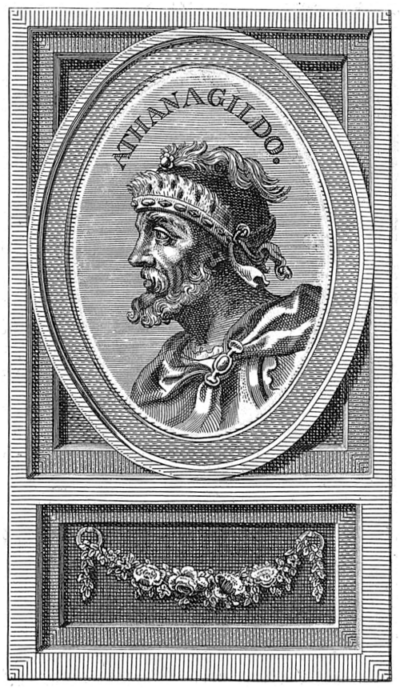
Athanagild
Athanagild was a King of Hispania and Septimania. Died June 3, 567, in Toletum. Positions held include king of Wisigoths (555–567).
Facts
11 facts · 1 confirmed by two sources · 3 cited · 7 from one source
Where this comes from
Papalocal keeps its own record. It started from these sources; what each one said is kept here as it was copied, so a change on their side never changes this page by itself. Tap one to read its version.
What Wikidata says · copied November 16, 2026 · revision 2513809295
- Described as
- King of Hispania and Septimania
- Died
- June 3, 567 · 1 reference
- Died in
- Toletum · 1 reference
- Name at birth
- Athanagildus
- Citizen of
- Visigothic Kingdom
- Occupation
- sovereign; warrior
- Positions held
- king of Wisigoths (555–567)
- Spouse
- Goiswintha
- Children
- Galswintha · 2 references; Brunhilda of Austrasia · 1 reference
- Religion
- Visigothic arianism
- Wikipedias with a page
- 36
Wikidata item Q313197 (wikidata.org/wiki/Q313197), public domain (CC0). Copied November 16, 2026.
What Wikipedia says · copied November 16, 2026 · revision 1380891450
Athanagild (c. 517 – December 567) was the Visigothic king of Hispania and Septimania. He had rebelled against his predecessor, Agila I, in 551. The armies of Agila and Athanagild met at Seville, where Agila met a second defeat. Following the death of Agila in 554, he was sole ruler for the rest of his reign.
Roger Collins writes that Athanagild's reign "is perhaps more significant than our sources may care to let us believe." Collins argues that the account of Isidore of Seville may be colored by the hostility subsequent Visigothic kings had towards Athanagild and his descendants.
- Born, in its opening lines
- c. 517
- Died, in its opening lines
- December 567
From the Wikipedia article “Athanagild” (en.wikipedia.org/wiki/Athanagild), by its contributors, under CC BY-SA 4.0 (creativecommons.org/licenses/by-sa/4.0/). Copied November 16, 2026; not changed.
Confirmed Two sources agree. Cited One source, and it names where it got it. One source One source, without a reference of its own. Sources disagree The sources disagree. We show the best-supported value and keep theirs below.
