
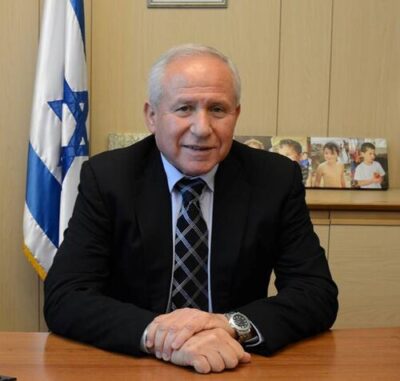
Avi Dichter
Avi Dichter is an Israeli politician. Born December 14, 1952, in Ashkelon. Positions held include Knesset member (2 times) (2006–) and Minister of Agriculture and Rural Development (2022–). Educated at Tel Aviv University and Bar-Ilan University.
Facts
14 facts · 1 confirmed by two sources · 5 cited · 8 from one source
Where this comes from
Papalocal keeps its own record. It started from these sources; what each one said is kept here as it was copied, so a change on their side never changes this page by itself. Tap one to read its version.
What Wikidata says · copied November 18, 2026 · revision 2562660155
- Described as
- Israeli politician
- Born
- December 14, 1952 · 1 reference
- Born in
- Ashkelon · 1 reference
- Citizen of
- Israel
- Occupation
- politician · 1 reference; soldier
- Positions held
- Knesset member (2 times) (2006–) · 1 reference; Minister of Agriculture and Rural Development (2022–) · 1 reference
- Political party
- Likud; Kadima
- Education
- Tel Aviv University; Bar-Ilan University
- Military branch
- Shin Bet
- Lived in
- Ashkelon · 1 reference
- Website
- https://avidichter.co.il/
- Wikipedias with a page
- 20
Wikidata item Q790699 (wikidata.org/wiki/Q790699), public domain (CC0). Copied November 18, 2026.
What Wikipedia says · copied November 18, 2026 · revision 1385716780
Abraham Moshe "Avi" Dichter (Hebrew: אַבְרָהָם (אָבִי) מֹשֶׁה דִיכְטֶר, IPA: [ˈavi ˈdiχteʁ]; born 14 December 1952) is an Israeli politician currently serving as the Minister of Agriculture and Food Development. A former Minister of Internal Security and Shin Bet director, he resigned from the Knesset and left Kadima in August 2012 in order to become Minister of Home Front Defense, a position he vacated in March 2013. Served as MK for Likud from 2015 to 2026.
- Born, in its opening lines
- December 14, 1952
From the Wikipedia article “Avi Dichter” (en.wikipedia.org/wiki/Avi_Dichter), by its contributors, under CC BY-SA 4.0 (creativecommons.org/licenses/by-sa/4.0/). Copied November 18, 2026; not changed.
Confirmed Two sources agree. Cited One source, and it names where it got it. One source One source, without a reference of its own. Sources disagree The sources disagree. We show the best-supported value and keep theirs below.
