
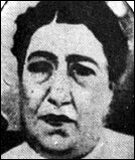
Ayesha Al-Taymuriyya was an Egyptian social activist. Born November 1840, in Cairo. Died May 26, 1902, in Cairo.
Facts
9 facts · 2 confirmed by two sources · 3 cited · 4 from one source
Where this comes from
Papalocal keeps its own record. It started from these sources; what each one said is kept here as it was copied, so a change on their side never changes this page by itself. Tap one to read its version.
What Wikidata says · copied November 17, 2026 · revision 2554222750
- Described as
- Egyptian social activist
- Other names
- aysha, ʿAʾishah Taymur, 'A'ishah Al-Taymuriyyah, Aisha E'ismat Taymur, 'A'isha al-Taymuriyya
- Born
- November 1840 · 1 reference
- Died
- May 26, 1902 · 1 reference
- Born in
- Cairo
- Died in
- Cairo
- Citizen of
- Egypt · 1 reference
- Occupation
- writer · 1 reference; poet · 2 references; novelist
- Siblings
- Ahmed Taymour
- Wikipedias with a page
- 27
Wikidata item Q2876220 (wikidata.org/wiki/Q2876220), public domain (CC0). Copied November 17, 2026.
What Wikipedia says · copied November 17, 2026 · revision 1384104012
Aisha E'ismat Taymur (Arabic: عائشة عصمت تيمور or 'A'isha al-Taymuriyya عائشة التيمورية; 1840–1902) was an Egyptian social activist, poet, novelist, and feminist in the Ottoman era. She was active in the early 19th century in the field of women's rights. Her writings came out in a period of time where women in Egypt were realizing that they were being deprived of some of the rights that Islam granted them. Taymur was one of the earliest Arab women to be alive while her poetry and other writings were recognized and published in modern times.
In the assessment of Mervat Fayez Hatem,Taymur used her work of fiction, social commentary and poetry to expand the definition of the nation-building process to include different social classes, ethnic groups and women of different generations and nationalisties. In this sincere effort, she was able to transform her very narrow social class rootes putting them into the service of the larger community. As such, she deserved, not just her poetry, the title of the "Finest of Her Class", which was one translation of the title of her poetry, Hilyat al-Tiraz.
- Born, in its opening lines
- 1840
- Died, in its opening lines
- 1902
From the Wikipedia article “Aisha Taymur” (en.wikipedia.org/wiki/Aisha_Taymur), by its contributors, under CC BY-SA 4.0 (creativecommons.org/licenses/by-sa/4.0/). Copied November 17, 2026; not changed.
Confirmed Two sources agree. Cited One source, and it names where it got it. One source One source, without a reference of its own. Sources disagree The sources disagree. We show the best-supported value and keep theirs below.
